
Is SEO dead? Jotform's VP of Growth on AI Overviews, llms.txt and Markdown
Is SEO dead? Jotform's Evren Bayraktar on falling template traffic, the AI prompt that replaced it, tracking AI visibility, and why llms.txt is still a test.
Published 25 min read

Founder, GrowthMarketing.ai
15+ years of experience
Emre Elbeyoglu is a B2B SaaS growth expert and Founder of GrowthMarketing.ai. With 15+ years of SEO and GEO experience, he studies search and AI ranking systems to support growth work for brands including Rakuten and Investing.com. He has also bootstrapped SaaS products including Popupsmart and LiveChatAI.
- Computer Technology & Information Systems, Bilkent University
- Co-founder & Growth Lead, Popupsmart (since 2019)
- Co-founder, LiveChatAI (since 2023)
Share article
Explore with AI
SEO isn't dead at Jotform, but the channel that brought its best leads is shrinking. Evren Bayraktar, Jotform's VP of Growth, told Emre Elbeyoglu that form template traffic falls every month, which his team links to AI Overviews, so Jotform routes that demand into Jotform AI, measures AI visibility with first-party referral data, and treats llms.txt and Markdown as experiments.
Interview summary and key insights
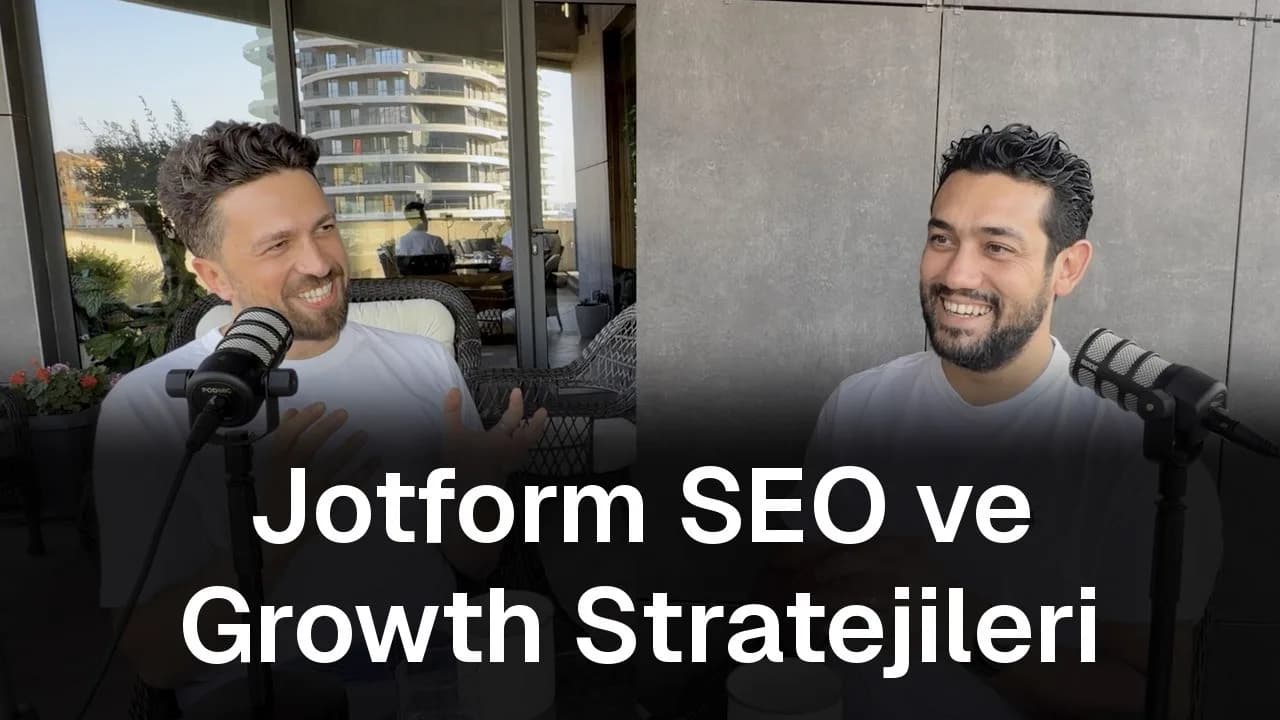
I'm Emre Elbeyoglu, and this is my second recorded conversation with Evren Bayraktar, VP of Growth at Jotform, the no-code form builder he joined about a decade ago, when it had 15 to 20 people. It's a follow-up to our first interview on Jotform's growth, recorded in Turkish and published in September 2026. I've worked in SEO for 15 years, so I asked the questions SEO people argue about on X: did Jotform really delete pages to grow, do AI visibility trackers pay off, and does llms.txt do anything? Evren answered with Jotform's own tests where he had them and with "we'll see" where he didn't. The last few minutes cover Website Widgets, the product Jotform built for brand awareness.
- Form template traffic is falling month over month. Template pages that rank for searches like "job application form" still matter to Jotform, but less than before, and Evren's team links the decline to AI Overviews.
- Jotform put an AI prompt where templates used to be, and it worked. After signup, the "Create form" step now opens with a "Describe your problem" prompt. Templates and blank forms sit below it.
Our internal motto is this: if someone can do something by hand on the platform, AI will be able to do it too. We're trying to bring the system to that point. Whatever you imagine, it will be able to do.
- Jotform didn't delete pages to grow its blog. A viral case study on X read an Ahrefs chart as a deletion story. Evren says the growth came from trivia-question posts tied to Jotform's quiz builder.
- AI rank trackers show visibility, not value. Jotform runs prompts like "What is the best form builder?" through Profound, but Evren makes decisions from first-party referral traffic.
You track the results, but what does it gain you? That's the important part. I think we need to track visibility from our own data. In the end, those sites send us sometimes more traffic, sometimes less.
- llms.txt got almost no requests. Evren set an alert on jotform.com when the rumors started: nothing on day one, two, or three, and only occasional requests now.
- Serving Markdown to bots is an optimization game, not a must-have. Jotform A/B tests Markdown on matched pages. Sometimes it changed something, sometimes it didn't.
- Website Widgets grew to about 5,000 websites in roughly a month. Around 500 new domains a day were adding widgets when we recorded, and Jotform lets anyone remove its branding for free.
Evren and I talk about SEO over dinner more often than on camera, and this episode is the on-camera version of those dinners. I wanted to pin down three things SEO people keep stating as facts without data: that Jotform grew by deleting pages, that AI visibility tools tell you what to do, and that llms.txt or Markdown files get you cited. The interview is in Turkish. Quotes below are translated and lightly edited, and every timestamp links to that moment in the original video. The second half of the same session, on how Jotform's own team adopts AI and Evren's advice for B2B SaaS founders, is in part two: Jotform's AI adoption strategy.

Is SEO dead for B2B SaaS companies?
Not at Jotform. Evren's answer is that SEO still rewards companies that build for people, and that the sites that crash are usually the ones gaming the system. Individual page types lose traffic, but Jotform's total holds because it gains elsewhere.
That runs against what I see across the market. As I told Evren, plenty of B2B SaaS sites hit bottom over the past two years and I've seen very few climb. Jotform dipped last year too, then recovered and stayed stable. So I asked him for the strategy behind that, without the technical details.
I get a lot of questions inside the company too. We try to do things for people. As long as that's the target, I don't believe we'll lose much. Yes, some of this work has its own math, there's stuff running in the background, but if you do things without losing your focus on people, I believe you'll win at the end of the day.

His evidence is the shape of the traffic curve. He's watched sites add 100,000 visits in a few months and then fall just as fast. Jotform rarely has sharp rises or sharp drops, he said, "because we don't play games, we don't deceive anyone." It's the same philosophy he gave me in 2025, and it matches what I learned the hard way when Popupsmart lost 60% of its SEO traffic after the Helpful Content Update.
Then I pushed back, because a big brand makes that philosophy easier to follow:

Being an SEO at a brand like Jotform has big advantages, because there's a giant brand behind you, with all its power. But try SEO for a B2B SaaS from zero. That's where I can really believe in an SEO's knowledge and experience, because there's no brand. You're winning users one by one, and your product is new.
Evren agreed, and didn't dodge it:
Emre Elbeyoglu: You passed judgment last year, remember, on agency SEOs. Now say something bold: is SEO dead?
Evren Bayraktar: Building something from zero is really hard, and we don't experience that much. We play our games under Jotform's name. But we don't deceive anyone.
That's the caveat I'd attach to everything below. "Build for people" is necessary, but it isn't a distribution plan for a new product. The two situations side by side:
| SEO at Jotform | SEO for a new B2B SaaS | |
|---|---|---|
| Brand | "A giant brand" with its power behind every page | "There's no brand" |
| Users | 25+ million, per our 2025 interview | "You're winning users one by one" |
| Where traffic can go | Forms, workflows, apps, quizzes, widgets | One new product |
| Traffic pattern Evren describes | Few sharp rises or drops | Hard to get traffic at all |
| What "do it for people" buys you | Stability through algorithm changes | A foundation, not reach |
How are AI Overviews changing Jotform's template traffic?
Traffic to Jotform's form template pages falls month over month, and the team sees AI Overviews answering the search before anyone clicks as one of the biggest reasons. Jotform's answer is to catch the same demand inside the product with Jotform AI.
The wider data points the same way. According to Pew Research Center, Google users who saw an AI summary clicked a traditional search result in 8% of visits, against 15% for those who didn't. Template searches are exactly the kind of query an AI answer can satisfy.
I opened with this because of our dinner conversations. Jotform's highest-quality leads came from people searching Google for things like "job application form" or "contact form" and landing on a template. So I asked whether that still works.
On the search results page, the form templates side is still really important for us, but it used to be even more important for organic user acquisition. Unfortunately, traffic there keeps decreasing month over month. We read one of the biggest reasons as the AI Overview part of Google's results growing.
Some of that traffic is gone. But people use AI more, and Jotform launched Jotform AI in February to compensate for the decline, Evren said. The product change is simple to describe:
Before, there were templates, and people could go straight to ready-made ones. Now a person explains their problem in two sentences and Jotform AI builds that solution directly as a form. If the solution needs a workflow behind it, it adds that too, or it creates an app around the form.
I cut in here with my own experience. Our AI chatbot at Popupsmart gets endless "can it do this?" requests, and a small product can't meet all of them. Jotform can, because it already connects to sheets, workflows, and apps. That breadth is what turns an AI prompt into a lead.
What changed in Jotform's signup flow?
Jotform founder Aytekin Tank had told me about a change after signup, so I asked Evren for the details. Showing templates in the "Create form" step started as a growth-hacking experiment, and it worked. The latest test replaced those templates with an AI prompt, and that worked too.
| "Create form" step | Earlier winning experiment | Current flow |
|---|---|---|
| First thing a new user sees | Form templates | A "Describe your problem" AI prompt |
| Other options | Start from a blank form | Start from scratch, choose a template, or pick another Jotform product |
| Evren's verdict | Replaced | "It was successful," and still being tested |
Emre Elbeyoglu's takeaway for SaaS teams: when AI Overviews stop sending people to your template pages, move the front door. The person who used to search "contact form template" now types one sentence into your product, and your templates sit one click below it.
Did Jotform delete pages to grow its traffic?
No. Evren says Jotform didn't delete many pages, even though a viral case study on X claimed that's how its blog traffic grew. Much of the growth came from trivia-question posts that link to Jotform's quiz builder.
Evren Bayraktar: Actually, we didn't delete many pages. Let me say it here: we didn't delete pages. We were even going to reply to the tweet. We talked about it with Aytekin.
Emre Elbeyoglu: You should have. People look at Ahrefs, at the pages chart going up and down, and decide: they deleted pages and their traffic went up. It shouldn't be that easy to say.
Emre Elbeyoglu stands by that point. A third-party page count moves for many reasons: pages dropping out of the ranking set, crawl changes, redirects, consolidation. Deletion is one explanation of several, and the site owner is the only one who knows which. The confident thread still gets the reach, which is why these stories spread.
Evren's actual explanation is product-led content:
People who analyze this have probably noticed: Jotform publishes trivia-question blog posts, and we get very serious traffic from them. But we tie that work to a product. Jotform has a quiz builder, and people use those trivia questions to make trivia quizzes. Every one of those posts has a quiz builder in it: do you want to create a quiz from these questions?
You can see the pattern in posts like Jotform's travel trivia questions. Many SEOs call this empty traffic. I don't, and I said so on camera: showing your brand to people in the audience who might use it is useful. Evren's reply was that "the brand game" has become very important lately, and Jotform keeps building products for it.
Emre Elbeyoglu's test for this kind of content: would the page still make sense if you removed the product link? If the quiz builder is the reason the trivia page exists, it's a funnel. If it's decoration, it's borrowed traffic that the next core update can take back. I use the same test in the three-layer non-commodity content checklist.
Do AI visibility tools like Profound actually help?
They show how often your brand appears for a fixed set of prompts, but Evren says that number doesn't tell you what it earns. Jotform uses Profound, one of the first AI visibility tools, and still makes decisions from first-party referral traffic.
He tried it for a plain reason: "If we don't try, who will?" A small startup can't spend effort on something with an unknown payoff. Jotform can.

The tool works like this: you write a prompt such as "What is the best form builder?", it runs that prompt hourly or daily, and it shows how often you appear in 100 runs and how often you're first versus fifth. Useful, Evren said, depending on what you want to see and how you use the data. Then he explained why he doesn't stop there:
You shouldn't burn the ships in a day over "traffic dropped" or "traffic went up." Don't get carried away. Observe it systematically, straight from first-party data: how much referral traffic comes to us. That's the most important thing.
He breaks that referral traffic down by page type: form builder pages, workflow pages, form templates, and the trivia posts on the blog. And he names the limit every tracker has: "Not everyone uses AI the same way. I ask one way, you ask another, and AI doesn't answer us the same way. Even if we ask the same question, it doesn't answer the same way."
Based on what Evren described, I'd split the two sources like this:
| Question | AI visibility tracker (e.g. Profound) | First-party referral data |
|---|---|---|
| Do we show up for "best form builder"? | Yes: share of 100 prompt runs, rank 1 vs rank 5 | No |
| Which of our pages get AI referral visits? | No | Yes: builder, workflow, template, and blog pages |
| Does it reflect how real users phrase prompts? | One fixed phrasing per prompt | Real visits from varied, personalized prompts |
| Best used for | Tracking the trend and competitor share | Deciding where to invest |
Emre Elbeyoglu is slightly warmer on trackers than Evren. They're the only way to see a competitor's share of the answer, and Jotform is cited often enough to have referral data worth reading. A small site might not. The nine experts at Sydney SEO Conference 2026 didn't agree on what AI citations are worth either. For the Google side, our free AI Overview checker lists the keywords where a domain is cited.
How do you teach an LLM what your brand does?
You give it clean facts on your own site, then get other people to repeat them. Jotform does the first part with a Facts for AI page and About-style pages, but Evren says the second part carries more weight.
I raised this one. The benefit of AI search, as I see it, is that LLMs can get to know you better, so it matters to hand them the features you don't advertise well. Jotform has a link in its footer to a page called Jotform Facts and Features for AI Chatbots and LLMs, and I wanted to know if it was deliberate.
Those are really About pages, what you write on your About page. In the end, these systems will learn something from somewhere, and you'll try to teach them the way you want them to learn. AI facts or About subpages are good places for that.
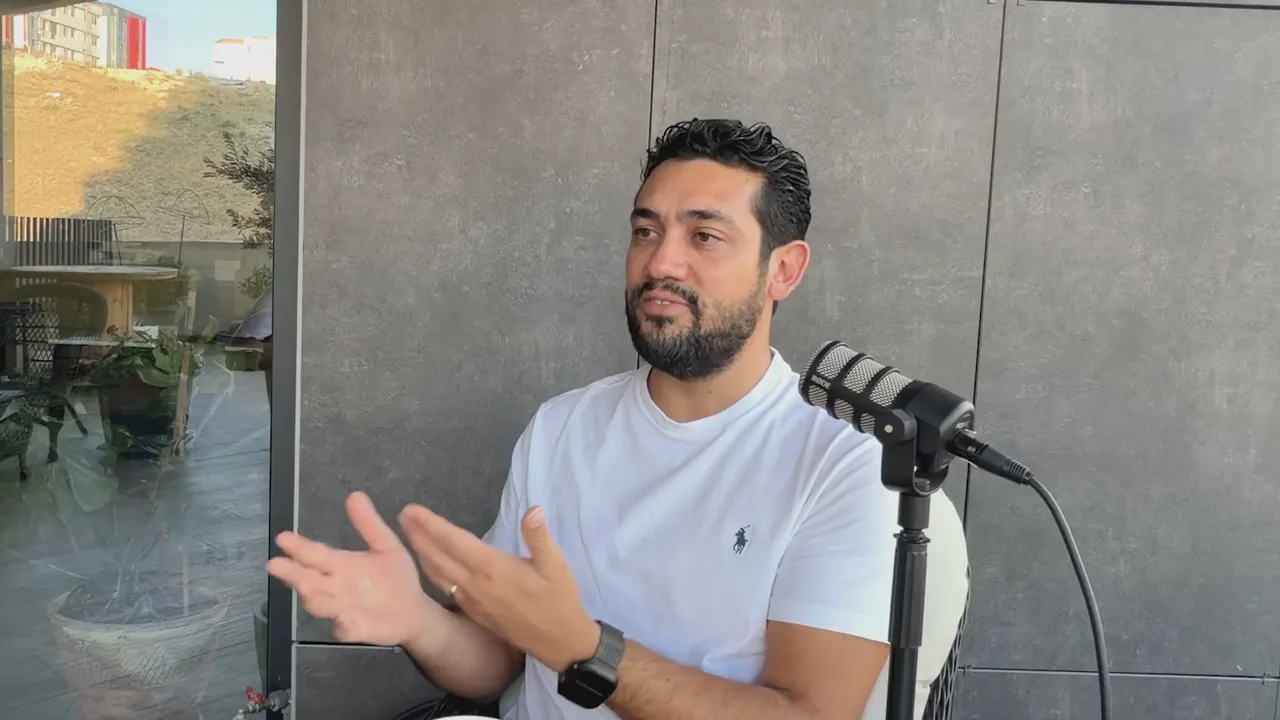
Visibility on the AI side, like we said about brand, looks outward more than at yourself. If I say I'm the world's best form builder, I don't know if they'll believe me. But if millions said it, they'd say: yes, the world's best form builder is Jotform.
The research agrees with him. Ahrefs' study of 75,000 brands found that branded web mentions had the strongest correlation with AI Overview brand visibility, at 0.664, well ahead of backlinks. It's a correlation, not proof of cause, but it points the same way as Evren's instinct. A Facts for AI page tells the model what to say. Other people's mentions decide whether it believes you.
Is llms.txt worth adding to your site?
Evren's data says not yet. He set an alert for llms.txt requests on jotform.com as soon as the rumors started, saw none in the first three days, and sees only occasional requests now. As far as he knows, no major AI system has formally adopted it.
llms.txt is a proposal for a Markdown file at a site's root that summarizes the site for language models. I asked Evren to share the anecdote he'd told me at dinner, because it's the most concrete llms.txt test I've heard from a large site.
I put myself in the shoes of the people writing those bots, the people deciding what the bot does. There's robots.txt. It's been here for years. I can reference that, so why wouldn't I? Do I need something very special?
He pointed out that a test like this only means something on a big site. Tracking llms.txt hits on evrenbayraktar.com wouldn't tell him much; on jotform.com it does. Day one, nothing. Day two, nothing. Day three, nothing. "Maybe one day," he said, "but you shouldn't run after every rumor."
Before that, Evren set me up to talk about my own contribution to the craze. When llms.txt appeared, Markdown files were flying everywhere, and I built markdown.new, a tool that turns any URL into Markdown. It got around a million impressions and has about 5,000 daily active users now. As I put it at 14:46: in an environment where nobody knows anything, everyone can know everything.
For what it's worth, this site publishes an llms.txt in English and Turkish. It costs almost nothing to generate from content we already have, so I treat it as a free option, not a strategy. Evren's alarm is the reason I'd never tell a client it will move their AI visibility.
Should you serve Markdown versions of your pages to AI bots?
Jotform tests it instead of assuming it. On matched pairs of pages, one served to bots as Markdown and one as HTML, Evren saw no change sometimes and a change other times. He calls it an optimization game, not a must-have.
Our A/B test culture is incredibly strong, so we test a lot of things. We started serving Markdown for some pages. Say I have two pages of the same type: I give one to the bot as Markdown and not the other. Will anything change in their lives? We saw that it didn't, but sometimes we saw that it did.
He grants that Markdown hands the model much cleaner content. His doubt is about necessity, and he made the case with the line that stuck with me most:
Sometimes I ask myself this. The tool can describe a fault in some valve model of a car engine you've never even heard of, and it can't clean that content out of HTML?
His conclusion: it may work in some places, or it may work tomorrow, so follow it closely and test it, but don't hang all your hopes on it. "Nobody should tell me that if I'd served the page's Markdown, my AI visibility would have gone up 100%," he said at 17:23. "That's very unlikely."
Emre Elbeyoglu sees Markdown differently, and said so on camera:
There's no settled standard. But Y Combinator's CEO said something related, not the same example: Markdown is the new programming language. Skill files are Markdown files now. Whatever is written in that Markdown file, AI agents can understand it and make inferences based on the context you give them.
The line comes from Garry Tan's Startup School 2026 talk, Own Your Intelligence, in a chapter titled "Markdown Is Code": "Markdown is actually code. If you can write clear instructions in English, you're a programmer. The compiler is a language model." His example was the same as mine, skill files. A Markdown file that says "step 1, do this; step 2, search Google for that" is now something an agent can execute. We used to build that in Zapier. It isn't a stable method (Aytekin Tank made the same point at an AI meetup: models don't return the same thing twice), but it's the easy path. I expect Markdown to become a bigger part of our work. Whether every page on a website needs a Markdown version, time will tell.
| Evren Bayraktar (Jotform) | Emre Elbeyoglu (built markdown.new) | |
|---|---|---|
| Markdown pages for AI bots | Tested on matched pages, mixed results | Cleaner input, more useful for agents than for crawlers |
| Main argument | Models smart enough to diagnose engine faults can parse HTML | Agents and skill files already run on Markdown |
| Verdict | "Not a must-have" | Worth building for agent workflows |
| Where we agree | Test it, watch it, don't bet everything | Time will show whether every page needs it |
If you want to try it without engineering work, I wrote up how I built a free file-to-Markdown converter for PDFs, DOCX files, and images.
Why did Jotform launch Website Widgets?
To reach website owners, a group that already embeds Jotform forms, and to turn that brand exposure into form users and paid users. Evren calls Website Widgets perhaps the fastest-growing product in Jotform's lineup, with about 5,000 websites using it within roughly a month of launch.
I'd spotted the product in Jotform's footer the day before: small widgets that show a site's visitor count, the weather, and so on. Evren explained where it came from:
The basic motivation is forms again. People come and build a form. Some share a link, some put it on their website. The website owners who put it on their site are one of Jotform's audiences. Since brand awareness is so important today, we thought there could be an opportunity here.
Building widgets is easy with AI, and as I pointed out, Jotform has an 850-person team. So the decision was: why not try? The audience was the same. One person wants to embed a form, another wants the weather or their Google reviews. Jotform shows up in front of them either way, and the bet is that some become form users and then paying customers.
The most-used widget is Google Reviews. You type your business name as it appears on Google Maps, and the widget pulls those reviews onto your site in different layouts through an API integration. Evren's pitch for it was one line: "Thirty seconds. The solution takes thirty seconds."

The numbers Evren shared, plus one from Jotform's site:
| Metric | Value | Source |
|---|---|---|
| Websites using Website Widgets | About 5,000 | Evren, 21:11 |
| New domains adding a widget | About 500 a day | Evren, 20:56 |
| Time since launch | About a month | Evren, 21:16 |
| Most-used widget | Google Reviews | Evren, 20:39 |
| Removing Jotform branding | Free, even on free plans | Evren, 21:33 |
| Widgets in the directory | 153 | Jotform's Website Widgets page, September 2026 |
A note on the math: 500 domains a day for a full month would be about 15,000, not 5,000. Read the 500 as the pace at the time of recording, after a slower start, rather than the average since launch.
Why is the Jotform branding free to remove?
Because brand reach matters more to Jotform than branding fees right now. I asked whether the branding was on by default, for backlinks and awareness:
Emre Elbeyoglu: Did you turn the branding on by default? Is there something like that, for backlinks and awareness?
Evren Bayraktar: There is. Many companies in this space sell that branding: they ask for money to remove it. In our widgets it's free right now, even on the free plans. Our branding is there, but anyone who wants to can remove it. This is a new area for us, and we're approaching it strategically.
The plan is to let people use it first and think about making money later; the goal for now is spreading the platform. The "powered by" credit is one of the oldest growth loops on the web, and it has an SEO edge that Google watches. Google's spam policies list "keyword-rich, hidden, or low-quality links embedded in widgets that are distributed across various sites" as link spam. A visible, branded credit that users can remove sits on the safe side of that line.
The other SEO upside I mentioned on camera is simpler: Jotform can rank widget landing pages for searches like "Google reviews widget" on the strength of its domain. I called it a proper growth project on camera, and I'd say it again here.
Frequently asked questions
Is SEO dead in 2026?
No, but the clicks it sends are shrinking on queries that trigger AI answers. Pew Research Center found that Google users who saw an AI summary clicked a traditional result in 8% of visits, against 15% without one. Jotform VP of Growth Evren Bayraktar says Jotform's overall organic traffic stays stable because it builds for people, even though some page types lose traffic.
How are AI Overviews affecting B2B SaaS traffic?
They answer simple, template-style searches before the click. Evren Bayraktar says traffic to Jotform's form template pages falls month over month, and the team sees AI Overviews as one of the biggest reasons. Jotform's response is Jotform AI, which builds a form, workflow, or app from a two-sentence description of the problem.
Did Jotform delete pages to increase its traffic?
No. Evren Bayraktar, Jotform's VP of Growth, says Jotform didn't delete many pages, despite a viral case study on X that read an Ahrefs pages chart that way. Much of the recent blog growth came from trivia-question posts, each linked to Jotform's quiz builder so readers can turn the questions into a quiz.
Do AI visibility tools like Profound work?
They show how often your brand appears for a fixed set of prompts, such as 'What is the best form builder?', checked hourly or daily. Jotform uses Profound, but Evren Bayraktar says the more useful signal is first-party referral traffic from AI tools, broken down by page type, because every user phrases prompts differently and gets different answers.
Does llms.txt improve AI visibility?
There's no evidence it does yet. Evren Bayraktar set up an alert for llms.txt requests on jotform.com when the rumors started and saw none in the first three days, with only occasional requests since. As far as he knows, no major AI system has formally adopted the proposal, so he treats it as a rumor not worth chasing.
Should you serve Markdown versions of your pages to AI crawlers?
Test it before you commit. Jotform served Markdown to bots on some pages and compared them with matched pages served as HTML; sometimes nothing changed and sometimes something did. Evren Bayraktar calls it an optimization game, not a must-have, while Emre Elbeyoglu expects Markdown to matter more as AI agents and skill files spread.
How do you get AI assistants to recommend your brand?
Publish clear facts about your product on your own site, then earn mentions elsewhere. Jotform keeps a Facts for AI page, but Evren Bayraktar says AI visibility looks outward: if millions of people call you the best form builder, the models will too. Ahrefs found branded web mentions correlate with AI Overview visibility at 0.664.
What is Jotform Website Widgets?
Website Widgets is a Jotform product for adding no-code widgets such as Google Reviews, weather, and visitor counters to a website. Evren Bayraktar says about 5,000 websites used it within roughly a month of launch, with around 500 new domains a day, and Jotform branding can be removed for free, even on free plans.
Key takeaways
- SEO still works for companies that build for people, but a big brand makes that advice easier to follow. A new B2B SaaS needs distribution on top of it.
- AI Overviews are eroding template-style search traffic. Jotform's answer was to move the same demand into its product with an AI prompt, which beat the old template-first signup step.
- Don't read a third-party pages chart as proof that a site deleted pages. Jotform's blog growth came from trivia posts linked to its quiz builder.
- AI visibility trackers measure appearance for fixed prompts. First-party AI referral traffic, split by page type, tells you what that visibility is worth.
- Facts pages tell models what to say about you; mentions on other sites decide whether they repeat it. Ahrefs puts that correlation at 0.664.
- llms.txt drew almost no requests on jotform.com, and Markdown for bots showed mixed A/B results. Test both, and don't expect either to fix AI visibility alone.
- Removable branding on a free product is a growth loop. Keep the credit branded and visible so it stays clear of Google's widget link spam policy.
This post is based on SEO Öldü Mü?Jotform'un AI, SEO ve Büyüme Stratejileri - Evren Bayraktar VP of Growth Jotform by Emre Elbeyoglu. Quotes are translated from Turkish and lightly edited for clarity.