
Jotform's AI adoption strategy: the five-times rule, Vibe Coders, and B2B SaaS growth advice
Jotform's Evren Bayraktar on the five-times rule for AI automation, the Vibe Coders hackweek, and his growth advice for B2B SaaS founders in the AI era.
Published 24 min read

Founder, GrowthMarketing.ai
15+ years of experience
Emre Elbeyoglu is a B2B SaaS growth expert and Founder of GrowthMarketing.ai. With 15+ years of SEO and GEO experience, he studies search and AI ranking systems to support growth work for brands including Rakuten and Investing.com. He has also bootstrapped SaaS products including Popupsmart and LiveChatAI.
- Computer Technology & Information Systems, Bilkent University
- Co-founder & Growth Lead, Popupsmart (since 2019)
- Co-founder, LiveChatAI (since 2023)

Share article
Explore with AI
Jotform's AI adoption strategy starts with one rule: if you do a task five times a day, automate it. In part two of Emre Elbeyoglu's interview, Jotform VP of Growth Evren Bayraktar explains how he makes his team show the method behind each automation, what non-technical staff built in a vibe coding hackweek, and what B2B SaaS founders should do.
Interview summary and key insights
I'm Emre Elbeyoglu, founder of GrowthMarketing.ai and co-founder of Popupsmart, and this is the second half of a conversation I recorded with Evren Bayraktar, VP of Growth at Jotform. Part one covered Jotform's AI search strategy: falling template traffic, AI visibility tools, llms.txt. This part is about Jotform's own team. How does a company that sells AI features to millions of users use AI inside its own growth team? After that we move to his growth advice for B2B SaaS founders, and to whether SaaS is dying at all.
- Everyone at Jotform has a ChatGPT account. Teams use Codex on the ChatGPT side, and Claude goes to specific teams for specific needs.
- The five-times rule drives what gets automated. If you do a task five times a day, Evren treats that as a problem to fix with AI, the way developers always have.
I tell the people on my floor, the ones I work with one-on-one in growth: you will use AI. If you don't, tomorrow you'll be the one who loses.
- He grades the method as well as the output. Each team brings one task they automated with AI to the Wednesday SEO meeting and explains how they did it.
- Pasting screenshots into ChatGPT is the anti-pattern he caught. Giving the model a URL or the text itself is faster and cheaper.
- Jotform has a GitHub team called Vibe Coders. In a hackweek, people with no software background built a subtitle tool, a GIF maker for outreach emails, and ad-optimization automations.
- His advice for B2B SaaS founders: try a lot, and solve one problem. Trying is "almost free" now, and fresh content gives small sites a shot at AI answers.
- Positioning decides whether cheap products sell. My example: "form builder" is very hard for a newcomer to win, "form builder for education" much less so.
It's very easy to build something now. In entrepreneurship there was always a barrier. People didn't succeed on the first try. They try, and try, and try, and it sticks. Now trying is almost free.
I asked about internal AI use because of a gap I keep seeing. On LinkedIn, everyone seems to be building agents. Inside the companies I work with, and at my own agency, most people end the day typing into ChatGPT. Jotform has a large team in Ankara and Evren runs a big part of it, so I wanted to know what AI adoption looks like there when nobody is posting about it. The interview is in Turkish; quotes are translated and lightly edited, and every timestamp links to that moment in the original video.

How does Jotform's growth team use AI day to day?
Every Jotform employee has a ChatGPT account. Teams use Codex on the ChatGPT side, and Claude is rolled out to specific teams for specific needs. Evren has spent about a year and a half telling his floor that AI use isn't optional.
My question opened with an observation. At companies like Intercom, even designers now write code and commit it; Intercom has written about designers shipping code to production. We work the same way on my team, in a more generalist mode. So what does Jotform do?
Evren started with the fear developers had when AI tools first came out: "No, I don't use AI, it'll take my job." I added the other excuse: it makes you lazy. He said not using AI is "a huge loss," and that this goes for growth and marketing as much as for engineering.
He used a Turkish idiom here that doesn't translate cleanly. A trade that guarantees you a living is your "golden bracelet," and Evren said everyone needs to be wearing the AI bracelet now. He's been saying it on his floor for about a year and a half. Some people adapted fast and some didn't, and he was candid about himself: "I'd say I was a bit late too, but for the last year and a half I've been living and breathing it."
What he described, in one table:
| Tool | Who has it at Jotform | Evren's words |
|---|---|---|
| ChatGPT | Everyone | "Everyone has a ChatGPT account" |
| Codex | Teams, through the ChatGPT side | "They use Codex on the ChatGPT side" |
| Claude | Certain teams | "In certain teams, for certain needs" |
Any company can buy that stack. The rules Evren puts on top of it were what I came to hear about.
What is the five-times rule for AI automation?
If you do the same task five times a day, it's a problem, and you should automate it. Evren says developers have always worked this way; AI extends the habit to anyone who can describe the problem and the result they want.
The first thing we try to do is this: I do this job five times a day. That's a problem. I need to be able to automate it. This used to be the developers' side: if you're doing something five times, there's a problem, fix it. Now it's like that for everyone. If you can explain the problem properly and explain the result you want, the tool builds it.
I like this rule because you can count it. "Use AI more" gives nobody anything to do on Monday morning, while "bring me the thing you did five times today" does.
There's a classic way to check the math. Randall Munroe's xkcd chart "Is It Worth the Time?" shows how long you can spend automating a routine task before you lose more time than you save over five years. The five-times-a-day column is Evren's rule in numbers:
| Time saved per run | Task done 5 times a day | Time you can spend automating it |
|---|---|---|
| 5 seconds | 5 times a day | 12 hours |
| 1 minute | 5 times a day | 6 days |
| 5 minutes | 5 times a day | 4 weeks |
| 30 minutes | 5 times a day | 6 months |
The chart dates from 2013, when automating meant writing the script yourself. With AI, building it often takes an afternoon, so even small savings clear the bar. The rule tells you what to automate. It says nothing about whether the automation will last, which is the part Evren manages most closely.
How do you get a team to adopt AI?
Review how people use AI as well as what they produce. Evren ended a Wednesday SEO meeting by assigning homework: next week, every team shows one task it automated with AI and explains how.
Our last meeting's agenda was this. I ended the meeting before it by saying: next time, everyone, every team, comes with "I automated one of my tasks by using AI this way." The way you use it matters a lot.
The meeting brings Jotform's content writers and SEO managers together every week. The assignment came out of one-on-ones. Evren usually meets team leads, but lately he's been pulling whole teams in to see the work up close. That's how he caught this:
A teammate was having AI read a piece of content and rewrite a sentence. To get it to read the text, they take a screenshot and send it to ChatGPT: revise this based on that page. Why are we taking screenshots? The AI goes over there and sheds sweat and tears. It burns tokens. Just give it the page URL, let it go read and understand. Or copy and paste the text.

The output in that example was probably fine, which is why a review of outputs alone would never have caught it. So the rule for the homework is that "the output is okay" isn't enough. "You'll also explain how you did it," he told the team at 03:56.
The screenshot habit is common, and I've caught myself doing it. Text in an image has to be read back out of pixels, and the model can still misread a word. A URL or pasted text gives it the exact words, and a URL also gives it the live page. Multiply that across a content team doing it all day and Evren's point stops being a nitpick.
Emre Elbeyoglu: I think building this know-how inside the team matters a lot. Making that investment in the team.
Evren Bayraktar: Right. That's what I'm working on right now, honestly. How can we really use AI efficiently as a team?
Why do most AI automations break within weeks?
Because people automate trivial tasks, or use a weak method, and the result isn't built to last. That was Emre Elbeyoglu's answer, based on what he sees at his agency, and Evren didn't argue with it.

Everyone says "I use AI, I build automations," but people can automate very simple, silly things, or use a bad method. Someone comes to you at the end of the week: "I automated this." But it can be an automation that won't still be standing two weeks later. Mostly, that's what happens. It's what happens in our experience too.
I went further at 04:51. The easy level is chatting with ChatGPT, maybe with a few MCP servers connected so it can pull data from your tools. Most people stop there, and some still don't use MCP at all. The automations that survive and keep producing results are rare, and so are the teams that build them.
Evren answered with his job description:
We're working so that the people who haven't succeeded can succeed too. That's really my job. Of course I don't know it very well either; I'm learning too. But everyone on the team needs to learn. That's my main focus. So I keep telling everyone: use AI as much as you can. Think about it, ask yourself: what did I do with AI today?
Putting our two views side by side, this is how I'd sort AI use on a team. The levels are Emre Elbeyoglu's framing, not Evren's, but each row comes from something one of us said:
| Level | What it looks like | Does it last? |
|---|---|---|
| Chat | Asking ChatGPT, pasting screenshots | Works, but wastes tokens and nobody learns from it |
| Connected chat | ChatGPT or Claude with MCP servers connected | Better answers, still one person at a time |
| Weekend automation | A script or flow one person built quickly | Often broken within two weeks |
| Reviewed automation | Shown to the team, method explained, reused | The level Evren's Wednesday homework pushes toward |
Can non-technical employees build tools with vibe coding?
At Jotform, yes. The company created a team called Vibe Coders under the platform organization on its GitHub, and in a hackweek, employees with no software experience built working internal tools there.
I asked whether anyone on his growth team uses Claude Code instead of plain Claude: building mini dashboards, writing scripts. Our hands got a lot stronger there, so I expected a yes. The answer was bigger than that.
Evren Bayraktar: Let me put it this way. Under the platform organization on Jotform's GitHub, we created a team called Vibe Coders.
Emre Elbeyoglu: Nice.
Evren Bayraktar: Really, it's like that now. Everyone can write code.
We even ran a hackweek. In that hackweek, in the Vibe Coders repo, teammates with no technical background, who'd never had any experience with software, built copies of the products they use. And they built really nice things.
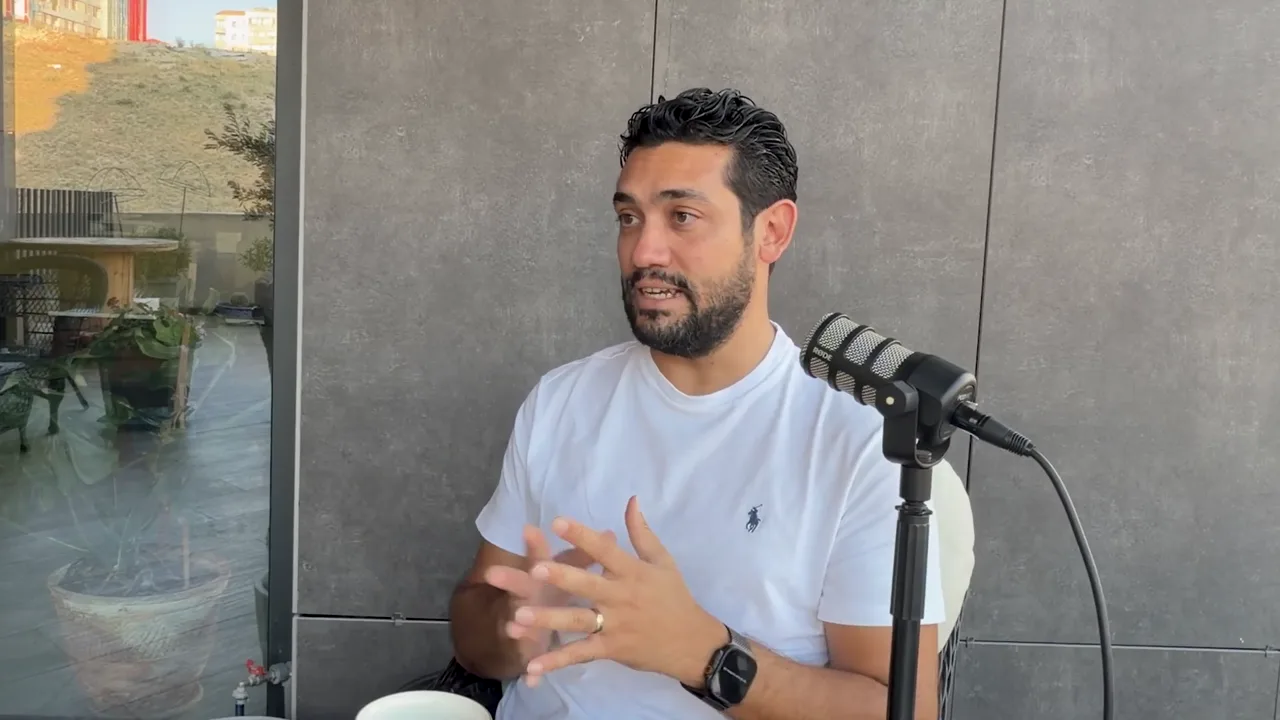
The examples he gave:
| What they built | Who it's for | When he mentions it |
|---|---|---|
| An app that prepares subtitles for a video | Anyone publishing video | 06:31 |
| A tool that makes GIFs to make emails more attractive | A teammate working on outreach | 06:38 |
| Automations that run some ad optimizations on their own | The paid ads side | 06:51 |
"Right now everyone on the floor can write code," he said. "I'd say I opened that door for them with the vibe coding team."
Andrej Karpathy coined "vibe coding" in February 2025. Martin Fowler's definition is the one I use: building software by prompting an LLM "without looking at any of the code that the LLM generates." Fowler's caveat fits Jotform's hackweek almost exactly. He says the output "often shows problems with maintainability, correctness, and security," so it's "best used for disposable software written for a limited audience." A subtitle tool for your own videos, or a GIF maker for one person's outreach, is that kind of software.
Jotform isn't alone. Intercom's design team ran a product design vibe coding hackathon in 2025 where three designers built a new Intercom Design website using only AI, with a first version in "just over a day." Both companies use the same format, a bounded event with a shared repo, and it's the format I'd copy. It gives non-engineers permission to build, and it keeps what they build where the rest of the company can see it.
The question I'd ask next time is about week three. Who fixes the subtitle tool when an API changes? That's the same durability problem as the weekend automations above, and a repo owned by the platform organization is a better answer than most companies have.
What growth advice does Evren give B2B SaaS founders?
Try many things, because trying is almost free now; solve one problem instead of 50; publish fresh content, because AI answers give small sites a chance; and get people talking about you on review sites and social media.
I asked for founders' advice in general terms, since it depends on the product and the sector. Evren hesitated first: he didn't want to pontificate, or have it taken as investment advice. "If you won't, who will?" I said, and he went on.
His first point was the quote in the summary above: building is easy now, and people who used to need dozens of attempts can make them cheaply. He called the next part tragicomic: products Jotform spent years building can now be approximated quickly. "Not identical, of course, but we can make similar things."
Focus on one area, find a real problem there, and solve that problem. There's no need to solve 50 problems. From day one, try something that solves one problem.
I learned that one the expensive way. Adding too many features cost Popupsmart a year and a half, so I nodded through this part.
Does fresh content give small sites a chance in AI search?
Evren thinks it does. His argument starts with Jotform's own advantage.

This is also a fact: there's a domain like Jotform's, DR 93. You make a page and it comes out first. The world was like that. But now, in those AI Overviews, fresh content is very important. I think content marketing got a bit easier in that sense. You write a page, you're not a very big site, and your page can still get a link and get visibility.
His DR figure holds up: Ahrefs showed jotform.com at DR 94 when I checked in October 2026. The freshness claim depends on which AI you mean. Ahrefs analyzed 17 million citations and found that URLs cited by AI assistants are 25.7% fresher on average than URLs in organic results: 1,064 days old against 1,432. ChatGPT leaned furthest toward new content. Google's AI Overviews went the other way, citing content 16 days older than organic results on average.
So a new page from a small site has a better shot in ChatGPT and Perplexity than in Google's AI Overviews, which still behave a lot like the organic ranking underneath them. Evren's advice still holds. Publish, iterate, and keep pages current, but measure where your citations come from before you credit freshness. Our free AI Overview checker lists the keywords where a domain is cited in Google's AI answers.
His last point was outside visibility. Get listed and reviewed on review sites, and get people talking about you. "We see a lot of it on Twitter right now," he said at 09:57. "Even if most of it is hot air, some products that really succeed come out of it." It's the same outward-looking idea from part one: what other people say about you is what AI systems learn.
| Evren's advice | His reasoning | Emre Elbeyoglu's addition |
|---|---|---|
| Try a lot | "Trying is almost free" | Cheap builds still cost attention; kill experiments fast |
| Solve one problem | "No need to solve 50 problems" | Feature creep is the slow version of the same mistake |
| Publish fresh content | Small sites can now get links and visibility | Truer for ChatGPT than for Google's AI Overviews |
| Get mentioned outside | Review sites and social media | Mentions are what AI assistants repeat |
Why does positioning matter more when building is cheap?
When a similar product takes a weekend to build, the product itself stops being the difference. Positioning decides whether people understand what you are, and Emre Elbeyoglu argued for a narrow one on camera.
Positioning matters a lot here. Showing up for "form builder" is very hard for someone starting today, but "form builder for education," say, or for one sector. Keeping the circle narrow is useful for a company that's just starting or still small. You can sell a good product with marketing, but you can't sell a bad product with marketing or growth. It flares up and dies like a straw fire.

The opposite failure is common too: a good product with bad positioning. It doesn't come alive in people's heads because it's confusing, and it needs to be simple. I said on camera that this now matters for LLMs as well. When someone asks ChatGPT for "a form builder for schools," a product that says exactly that on its site and in its reviews has a clear answer to give. A product that says "all-in-one platform for everything" doesn't.
Evren agreed and turned it into a thought experiment about search itself:
Imagine saying "I have a search engine idea." Today that sounds a bit absurd: it's Google, it knows everything. Then what happened? LLMs came, and things shifted that way a bit. Why? They added a different value to what you search for. Or a search engine that only finds the best restaurants might be preferred too, something in that vertical. So I don't believe in "it's been built, it's over."
The restaurant search engine is the same argument I made in the rise of vertical AI agents: a narrow product built around one industry's workflow can beat a general one. Evren's closing line for the section was the practical version: "Building small things and trying them is what will win now."
Is SaaS dead?
Evren Bayraktar doesn't think so. When Emre Elbeyoglu asked whether SaaS is dying, Evren repeated the talk going around and answered with one word, "zor," which in Turkish means "hardly."

Emre Elbeyoglu: So is SaaS dying?
Evren Bayraktar: There's that thing going around right now: is SaaS dying? SaaS is dead, it's dying. Hardly.
Emre Elbeyoglu: How many SaaS subscriptions does Jotform have?
Evren Bayraktar: I can't give the exact number, but there are probably hundreds. A hundred, say.
Emre Elbeyoglu: I mean as tools you use.
Evren Bayraktar: As tools, sorry, as SaaS tools. I can't give you that one either, because I don't know. But there are.
He answered a different question first, then said he didn't know how many tools Jotform pays for. I hadn't expected a number; I asked to make a point. A company whose non-engineers vibe-code copies of the tools they use still runs on SaaS.
The market was less calm earlier this year. According to ACS Information Age, the S&P 500 software and services index fell about 8% in a single week in February 2026 after Anthropic released Claude Cowork plugins for finance, legal, marketing, and data analysis, and had lost around $1.4 trillion since January 28.
I don't think the hackweek and the sell-off contradict each other. Copying a tool got cheap, as Jotform's hackweek shows. Maintaining and supporting it didn't, which is why the hackweek tools are internal and why Fowler calls vibe-coded software disposable. Emre Elbeyoglu's read: SaaS isn't dead, but undifferentiated SaaS is in trouble, the kind with no clear problem and no clear positioning. Intercom's CPO made a sharper version of that case at SaaStr, which I wrote up in why most SaaS companies won't survive AI.
Why should operators share what they learn?
Because other people will tell your story if you don't. The interview ended with Emre Elbeyoglu pushing Evren to publish more, and Evren admitting he hasn't.
We live inside this world, but with all the work, honestly, we can't find time for ourselves. You have to start somewhere. We talk about brand, but we go through experiences many businesses can hardly imagine, and we rarely get the chance to share them. I feel that gap myself.
He has a personal site, evrenbayraktar.com, with "nothing on it," and an X handle, @evren, that he's had for years and never used. He said he plans to bring both to life, and that he already answers people who email him.
I also brought back part one's story about the viral X thread claiming Jotform grew by deleting pages. Someone should have replied, I said, for Jotform's reputation and his own. Evren was clear that nobody stops him from talking: "I'd have replied to that tweet. Someone from the team could have too." Even a "thanks for noticing" would have been something, he said at 15:12. "We didn't. That's probably just how I am. We'll open up slowly."
This is the part I'd underline for any operator. Part one ended on the idea that AI systems learn about you from what others say. When the most visible story about your traffic is a stranger's guess from a third-party chart, that guess is what gets repeated. Evren's experience is exactly the material that's missing: know-how that cost hundreds of thousands of dollars, and the output of an 800-person team, as I put it at the end of the recording. I'm hoping we record a third episode within a year.
Frequently asked questions
What is a good AI adoption strategy for a marketing team?
Start with the tasks people repeat, then review how they automate them, not only the output. Jotform VP of Growth Evren Bayraktar asks every growth and SEO team to bring one task they automated with AI to the weekly SEO meeting and explain the method. Everyone at Jotform has a ChatGPT account, and some teams also use Claude.
How does Jotform use AI internally?
According to Evren Bayraktar, everyone at Jotform has a ChatGPT account, teams use Codex on the ChatGPT side, and specific teams use Claude for specific needs. His growth team automates any task someone repeats five times a day, and Jotform's GitHub has a Vibe Coders team where non-technical staff build internal tools.
What is the five-times rule for automation?
If you do the same task five times a day, treat it as a problem and automate it. Evren Bayraktar says this used to be a developer habit, but anyone who can describe the problem and the result they want can now get AI to build the fix. The xkcd chart 'Is It Worth the Time?' puts numbers on it: shaving one minute off a five-times-a-day task justifies six days of work over five years.
Why do most AI automations fail?
Emre Elbeyoglu's experience at his agency is that people automate trivial tasks or use a weak method, and an automation someone shows off at the end of the week often doesn't survive two weeks. He says teams that get lasting results from AI adoption are rare; for most people, using AI still means chatting with ChatGPT, sometimes with MCP connections.
Can non-developers build useful tools with vibe coding?
Yes, for internal tools. During a Jotform hackweek, employees with no software background built a video subtitle tool, a GIF maker for outreach emails, and ad-optimization automations in the company's Vibe Coders repository. That matches Martin Fowler's view that vibe coding is best used for disposable software written for a limited audience.
Is SaaS dead in 2026?
Jotform's Evren Bayraktar doesn't think so; asked whether SaaS is dying, he answered 'hardly.' Software stocks did fall hard in early 2026: the S&P 500 software and services index dropped about 8% in one week in February after Anthropic launched Claude Cowork plugins, according to ACS Information Age. Copying a tool got cheap, but maintaining and selling one didn't.
How should a new B2B SaaS position itself against big competitors?
Narrow the circle. Emre Elbeyoglu's example is that ranking for 'form builder' is very hard for a new company, while 'form builder for education' or a single sector is winnable. Evren Bayraktar adds that a startup should solve one problem from day one instead of 50.
Does fresh content help small sites get cited in AI search?
Evren Bayraktar thinks so: a DR 93 domain like Jotform's used to rank first with any new page, but freshness now gives small sites a way into AI answers. Ahrefs' study of 17 million citations found AI assistants cite content 25.7% fresher than organic results, with ChatGPT showing the strongest preference and Google's AI Overviews citing slightly older content.
Key takeaways
- Make AI use countable. A task done five times a day is a problem to automate, and at that frequency a one-minute saving justifies days of building.
- Check how people automate, as well as what comes out. Jotform's Wednesday homework caught a writer pasting screenshots into ChatGPT, which an output-only review would have missed.
- Most automations die within weeks. Shared, explained, reusable automations are the ones that last.
- Non-engineers can vibe-code useful internal tools in a hackweek. Keep them in a shared repo with an owner, because vibe-coded software is disposable by design.
- For a new B2B SaaS: try a lot, solve one problem, and position narrowly. "Form builder for education" can win where "form builder" can't.
- Fresh content helps small sites most in ChatGPT and Perplexity; Google's AI Overviews still lean toward older pages.
- SaaS isn't dead, but undifferentiated SaaS is exposed now that copying a product is cheap.
This post is based on AI Çağında SaaS: Ürün, Konumlandırma ve Büyüme - Evren Bayraktar VP of Growth, Jotform by Emre Elbeyoglu. Quotes are translated from Turkish and lightly edited for clarity.