
How AI search is changing SEO: agents read 50 sites, page two counts, and tracking isn't enough
AI search is changing SEO: agents read 50 sites where people read three, rank tracking loses accuracy, and information gain decides which pages AI cites.
Published 16 min read

Founder, GrowthMarketing.ai
15+ years of experience
Emre Elbeyoglu is a B2B SaaS growth expert and Founder of GrowthMarketing.ai. With 15+ years of SEO and GEO experience, he studies search and AI ranking systems to support growth work for brands including Rakuten and Investing.com. He has also bootstrapped SaaS products including Popupsmart and LiveChatAI.
- Computer Technology & Information Systems, Bilkent University
- Co-founder & Growth Lead, Popupsmart (since 2019)
- Co-founder, LiveChatAI (since 2023)
Share article
Explore with AI
AI search is changing SEO from a race for Google's top three into a contest over what AI agents read and cite. Asked by Jotform's Evren Bayraktar, I explain why rank tracking is losing accuracy, why an agent might read page two, and why information gain now decides which pages get cited.
Interview summary and key insights
I'm Emre Elbeyoglu, founder of GrowthMarketing.ai. This is the closing segment of the session I recorded with Evren Bayraktar, VP of Growth at Jotform. For most of the session I asked the questions: part one covered Jotform's AI search strategy and part two its AI adoption inside the team. At the end Evren turned the microphone around and asked what I think AI search is doing to SEO. This post is my five-minute answer, with the sources and caveats I couldn't fit into a conversation.
- Even Ahrefs looks shaky as a source of truth. Backlink data still holds up, but traffic estimates and keyword tracking lost accuracy once AI Overviews took the top of the results page.
- The target moved from rank to entity visibility. For B2B SaaS, where one customer can be worth a lot, the question is whether AI names you and describes you correctly.
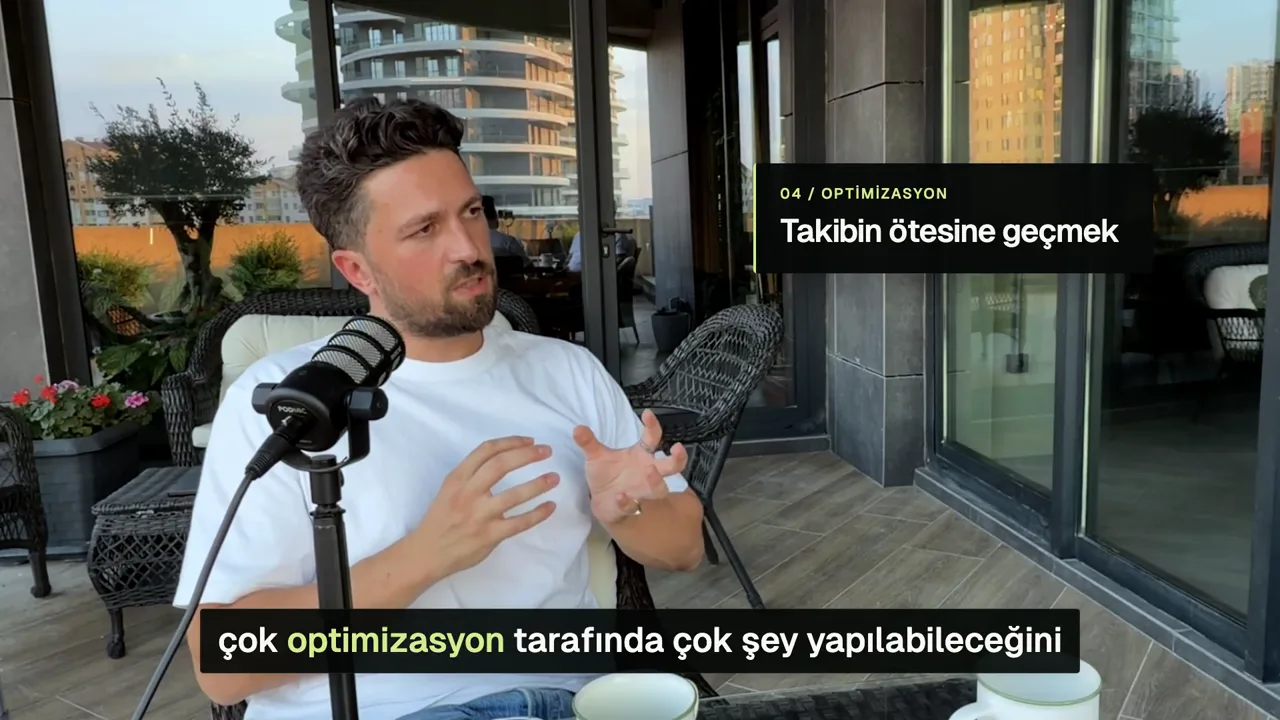
This is probably the first time there's been a change like this. Even Ahrefs could be shaken off its throne, because you look at it and it can't estimate traffic correctly.
- AI agents read 50 sites where people read two or three. My example was a shopper looking for the jeans with the best cotton. The number is an illustration, not a measurement.
- Page two can count again. An agent doing more research may read past the first page, and Ahrefs data shows most AI citations come from pages outside Google's top 10.
- Bots now outnumber people on the web. I cited Cloudflare. Its June 2026 figure is 57.4% bot requests, though that counts every kind of bot.
- Information gain decides what gets cited. A page that repeats what the model already knows adds nothing to its answer.
- Optimization beats tracking. We're testing this on new domains, and the plan is to turn what works into a product.
I think a new opportunity is born every day. If you look at work from the negative side, don't do business at all.
I've worked in SEO for more than 15 years, almost always under a growth title, and SEO has usually been the flagship channel for leads, sign-ups, and traffic. I said on camera that this is probably the first change of its size I've seen, and I stand by that. What I didn't do on camera was back the claims with data, so I've added it here, along with the places where I'd now phrase things more carefully. The conversation is in Turkish. Quotes are translated and lightly edited, and every timestamp links to that moment in the original video.
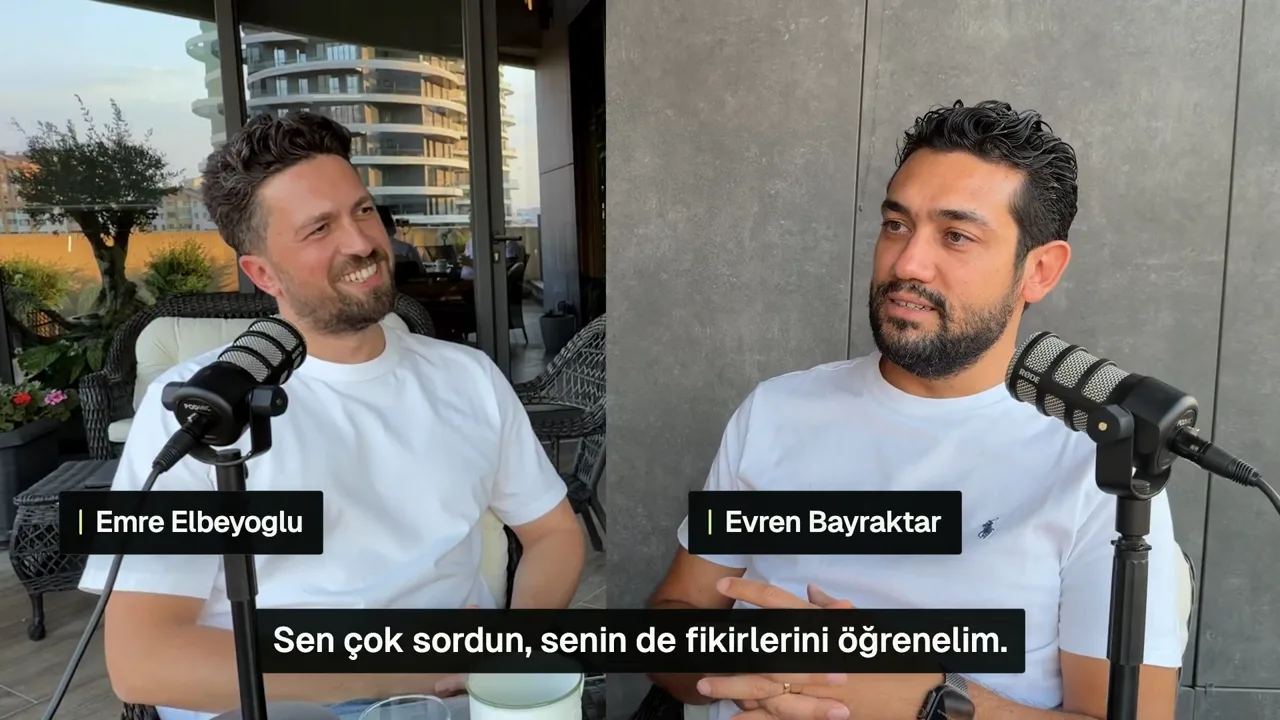
Why are SEO tools like Ahrefs losing accuracy?
Rank-based SEO tools were built for a page of ten blue links, and AI Overviews now sit above those links. A tool can still tell you that you rank third. It can no longer tell you what third is worth.
You look at a domain's backlinks, and that still works. But keyword tracking isn't what it used to be, because there's an AI Overview above it. Ahrefs analyzes that and shows it too, but it got limited, and it hasn't really adapted to the agentic structure.
The reason is in how traffic estimates work. A third-party tool takes the search volume of a keyword, applies an expected click-through rate for your position, and adds it up. That click curve was stable for years. AI summaries broke it: Pew Research Center found that Google users who saw an AI summary clicked a traditional result in 8% of visits, against 15% when no summary appeared. Halve the clicks and every estimate built on the old curve is off by the same margin.
In the video I also said that everyone uses Ahrefs out of habit right now, and that's still true. "Shaken off its throne" was about the model, not the company. Ahrefs has already shipped new products for this, like Brand Radar, which tracks brand mentions inside AI answers. My point is narrower: a position report alone doesn't tell you much anymore.

What does AI search visibility mean for B2B SaaS?
AI search visibility means being the entity an AI system names, and describes correctly, when someone asks about your category. For B2B SaaS this matters more than for most businesses, because a single customer can pay for months of content work.
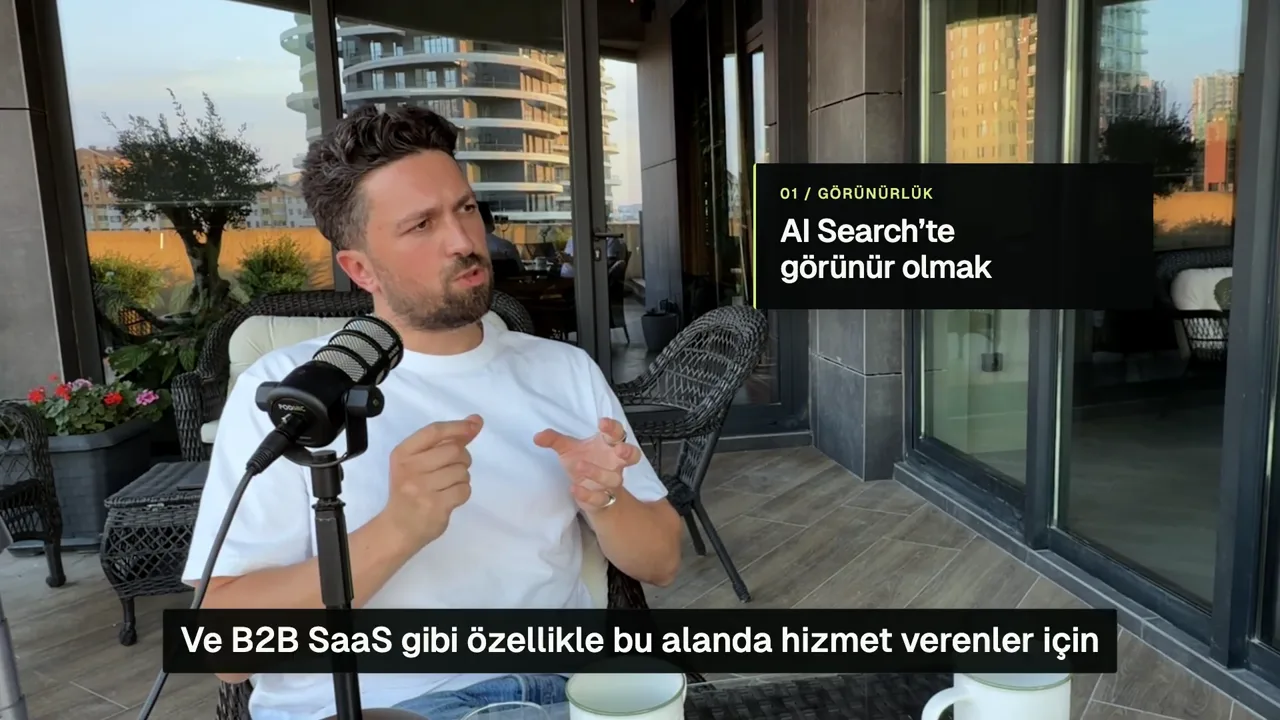
AI search is more about entity visibility. For B2B SaaS, where even one customer is valuable, the question now is: how do I appear inside AI Overviews, and how do I explain myself better to AI? I think I can do much more to increase that visibility than to track it.
"Explain myself to AI" is the part I'd underline. In part one, Evren described Jotform's Facts for AI page and its prompt tracking in Profound. That's one side. The other is what the rest of the web says about you, because models learn your category from everyone's pages, not only yours.
We're running this as an experiment rather than a theory. As I put it at 01:32, we're "opening different domains from scratch" to see what gets a new site into AI Overviews and ChatGPT. A fresh domain has no brand history, so whatever moves it is the work itself. I ran a from-zero test with AI-generated content back in 2023 and wrote it up as a programmatic AI SEO experiment that reached 150,000 monthly visits; the new tests ask the same question about AI answers instead of rankings. If you want to see where Google already cites a domain, our free AI Overview checker lists the keywords.
Here's the comparison I was making across the whole answer, in one table:
| Classic search | AI search | |
|---|---|---|
| The goal | One of Google's top three positions | Being named in the AI answer |
| Who reads your page | A person, two or three sites deep | An agent, up to 50 sites deep |
| Page two | Effectively invisible | Can still be read |
| What you measure | Rank and estimated traffic | Visibility first, then a KPI from optimization |
| What wins | Similar content with better links | Information the model doesn't have |
How do AI agents shop differently from people?
An AI agent compares more sources than a person would and hands back a shortlist. The person never sees most of the pages that shaped the decision.
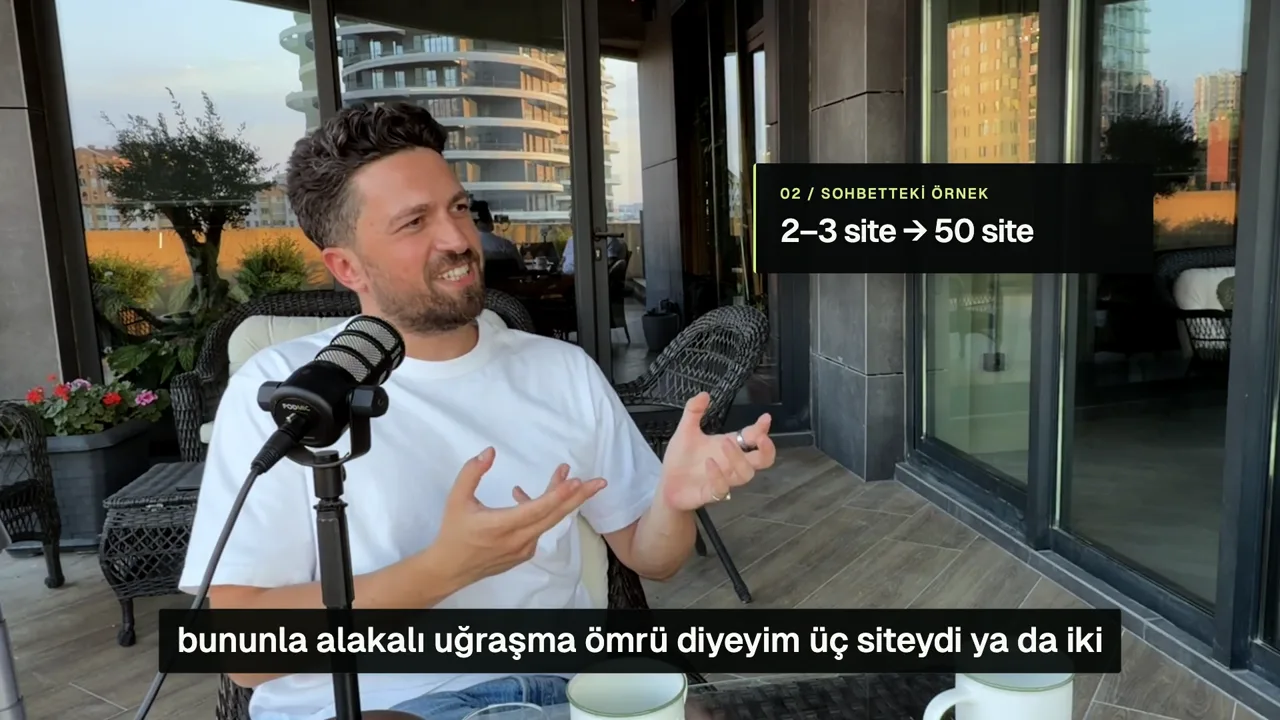
Emre Elbeyoglu: Say I have an e-commerce site. If you're looking for the jeans with the best cotton, you now give that job to an agent. It visits 50 sites for you and picks out the answer with tweezers.
Evren Bayraktar: Exactly.
Emre Elbeyoglu: A person's patience for this used to be three sites. They'd visit two and ask a friend. Now the choice has become more rational.
The editor put this moment on screen as "2–3 sites → 50 sites," and that's the clearest way I know to say it. The 50 is my illustration. Google's own description points the same way: AI Mode uses a "query fan-out technique," splitting a question into subtopics and running many searches at once. In Google's ticket-buying example, AI Mode goes "looking across sites" for options and fills in the forms, and its agentic checkout can buy a product on the user's behalf.
What changes for a seller is who reads the product page. A person skims photos and price. An agent reads the fabric composition, the return policy, and the sizing table, because the user asked for "the best cotton." If those facts live in an image or a PDF, the agent can't use them.
Does ranking on page two matter in AI search?
It can, because AI agents read past the top results. A page that a person would never scroll to can still end up in the agent's research.
So maybe being on page two counts for something now, for an e-commerce site, because the agent might look at page two too, since the task needs more research. If you give that content to the agent correctly, your product can sell much better.
The data backs this up, and goes further than I did. In a study of 15,000 prompts, Ahrefs found that only 12% of URLs cited by ChatGPT, Gemini, and Copilot rank in Google's top 10 for the same prompt. More than 80% of their citations came from pages that don't rank for the original query at all. Perplexity was the exception, with 28.6% of citations from the top 10.
One caveat on my own claim. Those pages aren't winning because the agent politely reads page two of your query. They're winning because the assistant runs its own follow-up searches, and those pages rank for one of them. The practical advice is the same either way: answer the narrow follow-up questions in your product and category pages, because those are the searches the agent actually runs.
Is there really more bot traffic than human traffic now?
Yes, by Cloudflare's count, but its figure covers every kind of bot, not only AI agents. In June 2026, Cloudflare reported bots at 57.4% of requests against 42.6% from humans.
I believe this shift will change a lot, because according to Cloudflare's report there's now more agent traffic on the web than human traffic.
Cloudflare CEO Matthew Prince announced the crossover on X, writing "Welp, that happened faster than I predicted," as NBC News reported. In March 2026 he had predicted it for 2027. On camera I said "agent traffic," which was looser than the data. Cloudflare's number counts crawlers, scrapers, and monitoring bots too. The part that matters for SEO holds anyway: more and more of the readers of your page aren't people.

What is information gain, and why does it matter for AI search?
Information gain is how much new information a page adds beyond what the reader has already seen. For AI search, the "reader" is a model that has already read most of the web, so a page that restates the consensus gives it nothing to cite.
Agents are much smarter. We used to write content, and even when everyone wrote, the same things came out and they all looked alike. Now, in Google's new patents, there's information gain: what are you writing or saying that the agent doesn't already know? That's moving to the front. But everyone is still doing the same things.
A correction to myself: the patent isn't new. Google's US 11,354,342 B2, "Contextual estimation of link information gain", was granted on June 7, 2022. It describes scoring the documents a user hasn't seen yet by how much they add to the ones they already have. What's new is that the idea now describes how AI answers get built, not only how a results page might be re-ranked.
Then I pointed at Evren, because Jotform already acts on this. I said I know he has the best writers write Jotform's content, "because if they add even the smallest thing, AI can understand it now." That's a budget argument as much as a writing one. When a model can tell one extra fact from a reworded paragraph, fewer, better pieces beat more, cheaper ones. Information gain is layer two of my three-layer non-commodity content checklist, if you want the full test.

Why does optimization beat visibility tracking?
Tracking tells you where you stand in AI answers. Optimization changes where you stand, and only that produces a number you can report.
That's why I think much more can be done on the optimization side than on visibility, and the people doing it can get traffic very easily and pull ahead. We're testing this right now, and we can more or less see the traffic results.
By "visibility" I meant the monitoring layer: dashboards that check a fixed list of prompts and report your share of mentions. They're useful as a baseline. They don't move anything. Note my own hedge, too: "more or less." Our test results are early and unpublished, so treat this as a direction, not proof.
Evren's reply is the reason I think this has to become a product rather than a consulting habit:
Evren Bayraktar: As you said, the optimization side needs close follow-up and a lot of experiments. Simplifying it so everyone can benefit is very valuable.
Emre Elbeyoglu: And with this optimization you can produce an output. You can show a KPI. So our plan is to do it internally first and then turn it into a product.
The KPI point is the one I'd repeat to any marketing lead. A visibility score is hard to defend in a budget meeting. Traffic, sign-ups, or pipeline from pages you changed is not. The product I mentioned isn't public yet, and I promised Evren the first test account. I'll write about it here when it ships.
What comes next for SEO?
Nobody gets a stable playbook. Google keeps changing search, and the job is to keep adapting.
Google isn't standing still either; it keeps changing things. We'll keep adapting. That's our job.
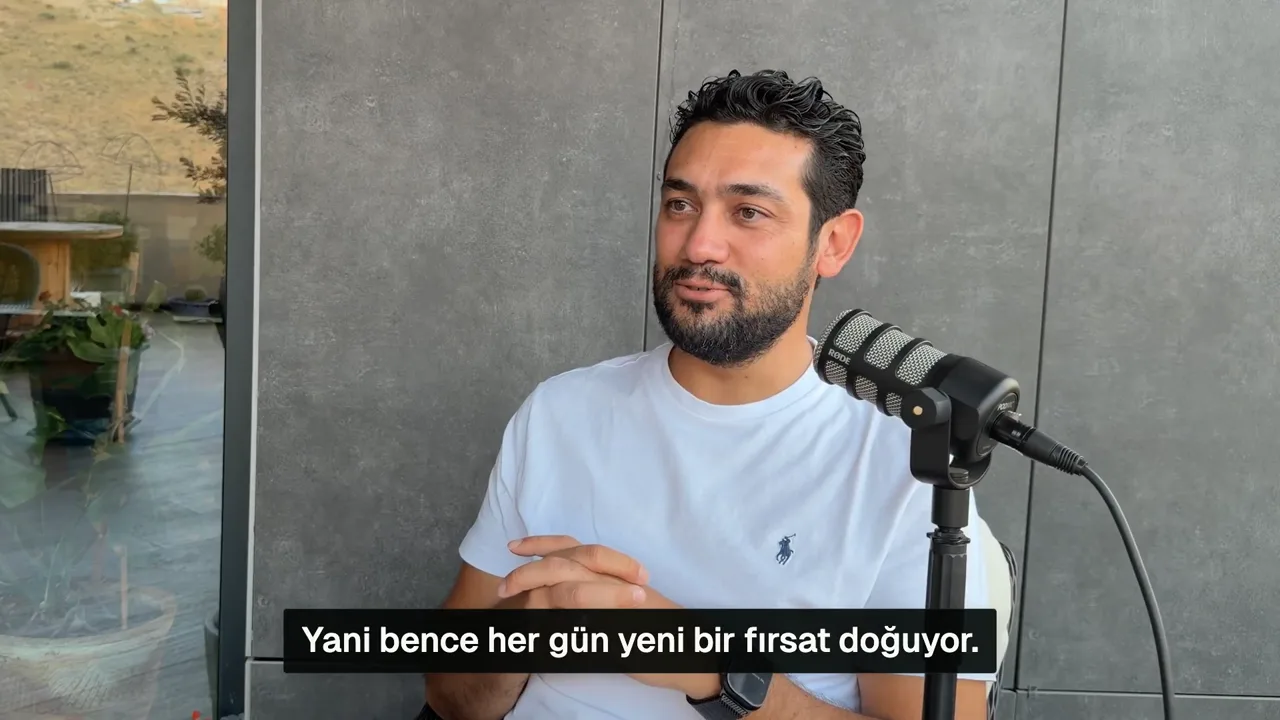
Evren closed it better than I did. He said a new opportunity is born every day, and that what matters is spotting where it comes from and taking a position there. His last line was "Search changed. There's nothing bigger than that." Coming from someone whose company has one of the strongest domains in its category, I read that as a warning as much as a pep talk: the moat a DR 93 site built over a decade counts for less in an agent's 50-site comparison.
Frequently asked questions
Is SEO dying with AI?
No, but the clicks it sends are shrinking where AI answers appear. Pew Research Center found Google users clicked a traditional result in 8% of visits with an AI summary, against 15% without one. Emre Elbeyoglu, founder of GrowthMarketing.ai, says the target has moved from Google's top three positions to being named inside AI Overviews and ChatGPT answers.
How will AI change SEO in 2026?
Three changes stand out. AI agents compare far more pages than a person would, rank tracking tools lose accuracy once AI Overviews sit above the results, and content that repeats what the model already knows stops getting cited. Emre Elbeyoglu argues the work is shifting from watching rankings to optimizing how AI describes your brand.
Why are Ahrefs traffic estimates less accurate now?
Traffic estimates multiply search volume by an expected click-through rate for each ranking position, and AI Overviews break that click curve. Emre Elbeyoglu says backlink data still works, but keyword tracking isn't what it used to be and the tool hasn't fully adapted to agent-driven search. Ahrefs has responded with new products such as Brand Radar.
Does ranking on page two matter for AI search?
It can. Emre Elbeyoglu's view is that an AI agent researching a purchase may read page two because it runs more searches than a person would. Ahrefs found that only 12% of URLs cited by ChatGPT, Gemini, and Copilot rank in Google's top 10 for the same prompt, mostly because assistants run their own fan-out queries.
Is it true that bots now make up most web traffic?
Yes, by two vendors' counts. Imperva's 2025 Bad Bot Report put automated traffic at 51% of all web traffic in 2024, and in June 2026 Cloudflare reported bots at 57.4% of requests against 42.6% from humans. Both figures count all bots, including scrapers and crawlers, not only AI agents.
What is information gain in SEO?
Information gain is how much new information a page adds beyond what the reader has already seen. Google's patent US 11,354,342 B2, 'Contextual estimation of link information gain,' granted on June 7, 2022, describes scoring documents this way. Emre Elbeyoglu's test for a page is simple: what does it say that the AI agent doesn't already know?
How do you optimize content for AI agents?
Give agents facts they can't find elsewhere and make them easy to extract. Emre Elbeyoglu's team tests this on new domains built from scratch, measuring whether pages show up in AI Overviews and ChatGPT. He says optimization beats tracking because it produces an output you can report as a KPI.
Key takeaways
- Rank tracking and traffic estimates lost accuracy once AI Overviews took the top of the page; backlink data still holds.
- AI search visibility means being the entity an AI names for your category, which matters most in B2B SaaS where one customer is worth a lot.
- AI agents compare far more sites than people do, so facts buried in images or PDFs never reach the decision.
- Only 12% of URLs cited by ChatGPT, Gemini, and Copilot rank in Google's top 10 for the same prompt, so answer the narrow follow-up questions agents search for.
- Bots passed humans at 57.4% of requests in Cloudflare's June 2026 data, though that counts every kind of bot.
- Pages that add information the model doesn't have get cited; pages that restate the consensus don't.
- Optimize for an outcome you can report as a KPI; a visibility score alone won't defend a budget.
This post is based on AI Search SEO'yu Nasıl Değiştiriyor? AI Overviews, Agent Trafiği ve Yeni Fırsatlar - Emre Elbeyoglu by Emre Elbeyoglu. Quotes are translated from Turkish and lightly edited for clarity.