


A three-person team. Two SaaS products sold at roughly 3.5x ARR. A failed third bet that they killed at the one-year mark instead of grinding through it. And the leftover infrastructure from that failure turned into a B2B data layer covering 50 million domains.
I sat down with Amir Nurmagomedov, co-founder of CompanyEnrich.com, to talk through about ten years of bootstrap SaaS work. Four products, two exits, one shutdown, and the AI pivot that came out of the wreckage of the shutdown.
This isn't a word-for-word transcript. It's the timeline, the numbers Amir gave on the show, and the decisions behind them. The same theme runs under every move he describes: stay small, stay close to the customer, ship fast, and don't romanticize the work that isn't working.
From sociology grad to SaaS founder
Amir studied sociology at METU. His path into software started in 1998 with the first computer in the house, then a teenage habit of poking around for software cracks and security holes back when the internet was still wide open. Freelance web work followed, then a co-founding seat at Onedio, one of Turkey's larger content platforms.
He stayed at Onedio about two years before something clicked:
"I got to experience the corporate side. I didn't enjoy it much, so I decided to go back to my own startup stuff."
That meant Kovan Studio, which they describe as a startup studio. The studio framing wasn't planned. It came from the work itself:
"It happened out of necessity. One thing led to another."
That single sentence describes how every product they've built since came to exist.
The first chapter: content arbitrage, then Facebook turned off the lights
Before any SaaS, they ran a Spanish-language content site targeting Latin America. The model was classic traffic arbitrage: buy Facebook ads, point them at content pages, sell display ads against the traffic, reinvest the margin. At its peak:
- 1 to 1.5 million daily visits
- Several million pages indexed
- An 8–10 person team, an office, and a real ad budget
The story ends in 2016. After the U.S. election, Facebook and Google tightened ad policies and the whole operation broke overnight.
"One night a colleague called: 'The pages are down, the ad accounts blew up, we're done.' We wrote to our Facebook manager. He said, 'I can't do anything. There's a support link in the top right, write there.' It was a 180-degree turn."
They got the money trapped in the platforms back, but it took about 30 days. The real lesson stuck:
"Doing business on someone else's junkyard is dangerous. One day they just say 'thanks, see you' and that's it."
Every SaaS decision after that traces back to this line.
Product one: Restpack — a $50 invoice that turned into a SaaS
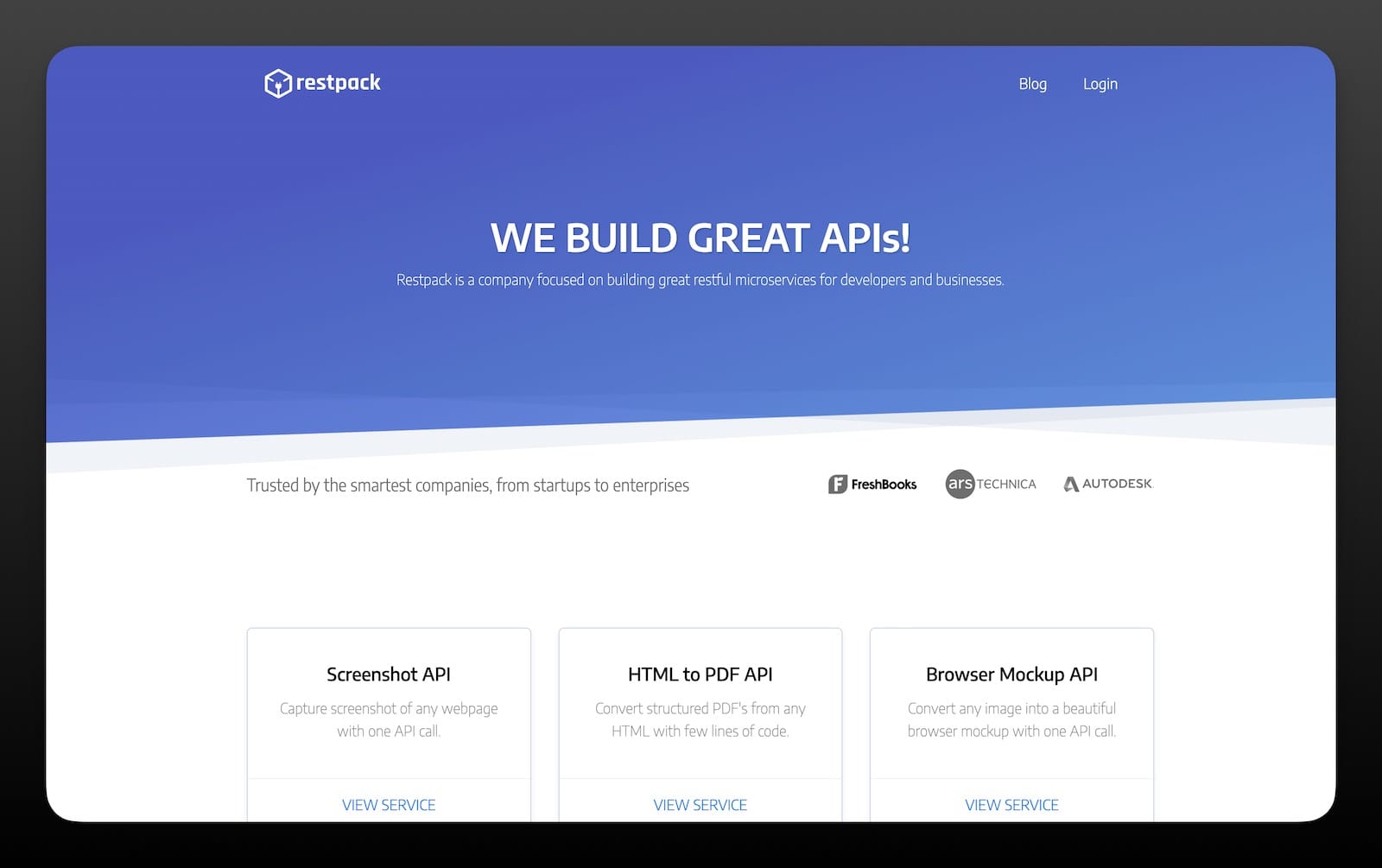
During the content era, they were building Facebook quizzes (the "type your name and get a personality card" kind). To make those cards shareable, they needed an HTML-to-PDF or screenshot API. The going rate from existing providers was around $50.
"I said, why don't we do this ourselves? We can do it. That's how everything starts for us."
That's how Restpack.io was born. An HTML-to-PDF and screenshot API, launched roughly ten years ago. Marketing was minimal. The growth strategy was two things: keep shipping, and answer support tickets within hours.
The Restpack exit: ~$20K MRR, ~3.5x ARR
After a few years it started to feel like dead weight. Technical APIs come with on-call costs (servers go down at 3am and someone has to fix them). They listed it on Acquire.com (then MicroAcquire). Multiple offers came in. They picked the one with the cleanest, fastest close, not the highest sticker price.
- MRR at sale: about $20K
- ARR multiple: roughly 3.5x
- Process: money wired the next day, full handover done quickly, "we barely spoke again"
The lesson worth pulling out of this one is contrarian:
"We loved how fast the deal closed, how little friction there was, that we were talking about the same deal from the same side of the table."
Speed and zero friction beat a slightly higher number. Restpack is still live, by the way. Same landing page, same product. Just running.
Product two: Announcekit a changelog SaaS that grew to ~400 paying customers
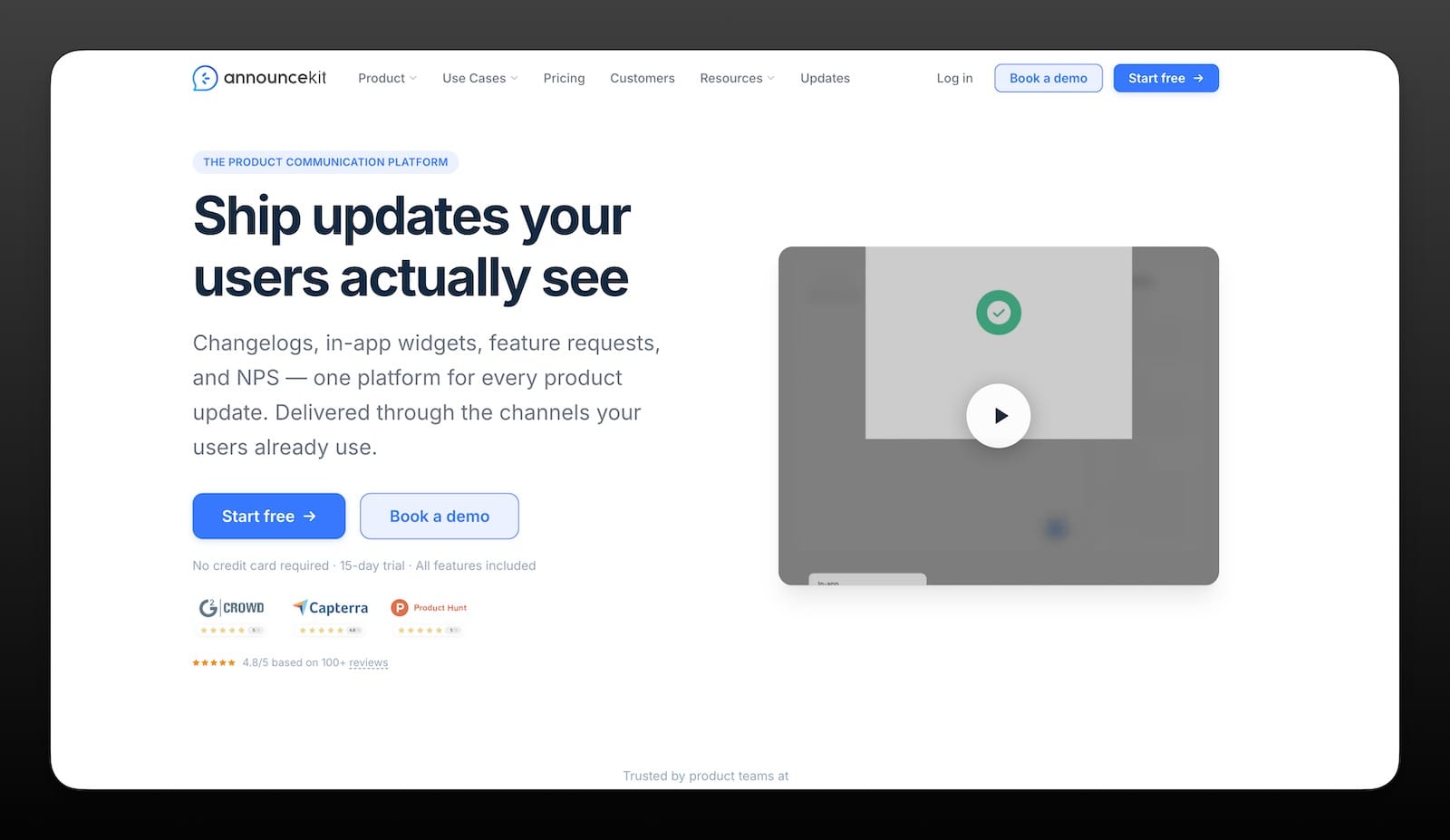
To promote new Restpack features they needed a changelog widget. There was one product on the market doing it. Same reflex as before: "We can build that."
Announcekit was a different category for them. A widget you embed in your app plus a standalone changelog page on your domain. The customer base shifted too. Now they were selling to other SaaS companies, which meant they were selling to people like themselves.
On growth, Amir said something that quietly demolishes most playbook advice:
"Honestly we didn't do much marketing or sales or ads. It was a niche sector, the market wasn't that big either."
Three things actually worked:
- The widget itself was the growth engine. Higher tiers removed the branding; lower tiers kept "Powered by Announcekit." Someone using a customer's app would see it, click it, and convert.
- Standalone changelog pages built an SEO footprint. Real backlinks from customer domains, not fake link building.
- Founder-grade support. When a customer asked for a feature, the answer wasn't "we'll add it to the backlog." It was a working version a day later. Customers told their friends.
When to kill the free plan
Amir's take here cuts against the SaaS Twitter consensus:
"Free makes sense when you first launch a product. People test it, find bugs, report them. But after a certain point they become a huge anchor. They start demanding things. You add a new feature and they ask why some other feature isn't there yet."
They eventually killed the free plan entirely.
Why they sold Announcekit
At the peak, the team was eight people. The pandemic remote hiring market made building a technical team painful:
"Sometimes we'd give a test task. People would refuse. 'I'm not doing tasks. You reached out to me, hire me and I'll work.' That kind of attitude."
HR processes, sales-CSM-design-engineering hires, quarterly meetings, planning cycles. Amir calls this period "everyone was picking jobs." The team's DNA was three people who all talked to customers directly. An eight-person operation wasn't a natural extension of that, it was a different company.
Pandemic plus the culture mismatch plus inbound acquisition emails meant they listed Announcekit on Acquire.com.
- Customers at sale: about 400 paying
- ARR multiple: roughly 3.5x (with earn-out tied to growth targets)
- Buyer: an aquihire-style studio with its own product, design, and support team
- Transition: 1–3 months of handover; most of the team stayed on
- Year: 2023
The other lesson here. They turned down offers that came with "stay and run it for a year, then get your money" structures.
"We're selling because we don't want to run it anymore. That offer doesn't make sense."
Usermotion: a year of grinding, then knowing when to stop
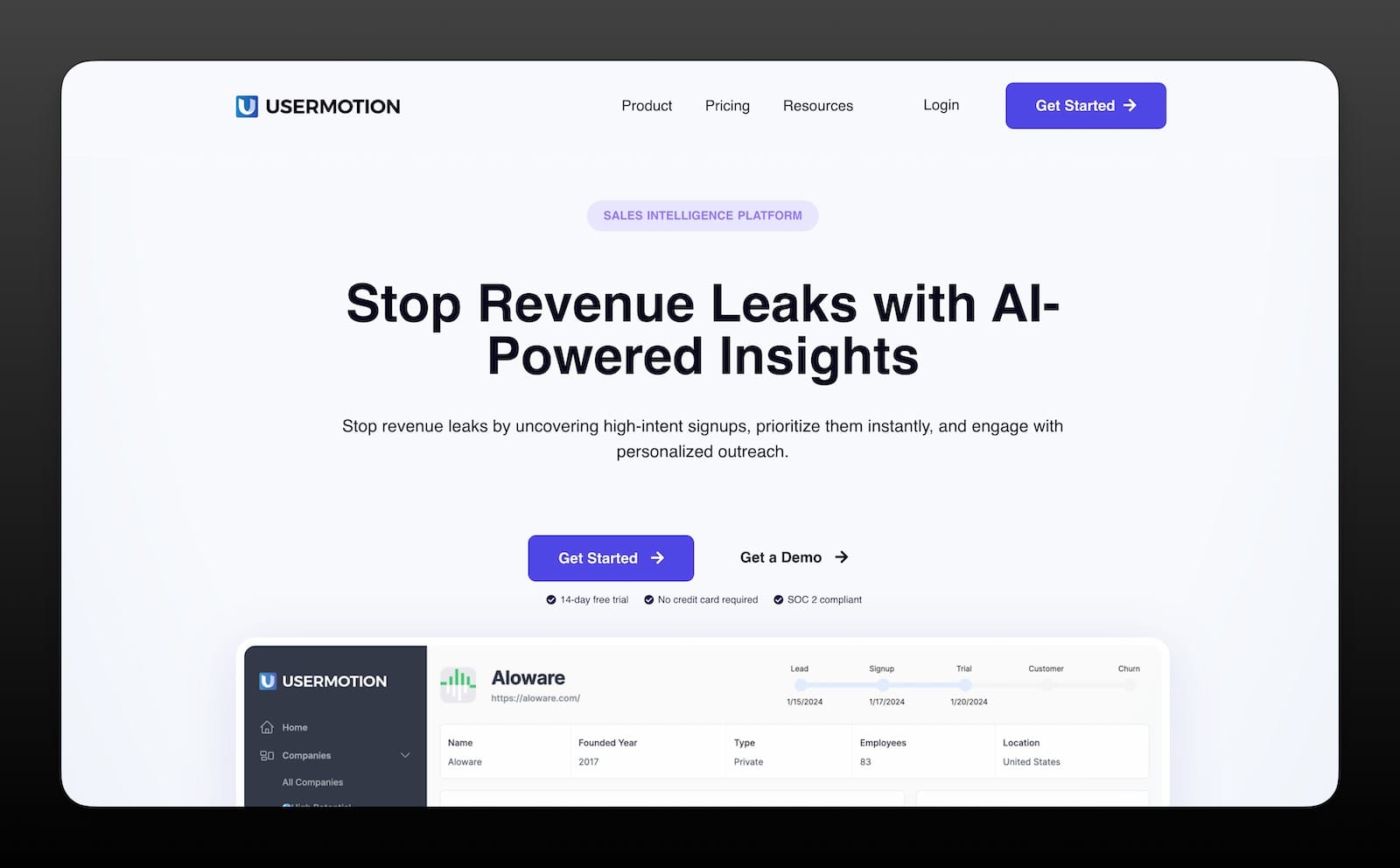
After two exits, the urge to build something new came back fast. The third product was Usermotion, an AI-driven lead scoring and product engagement tool for self-serve SaaS.
The hypothesis came from Amir's own behavior during Announcekit. When someone signed up but didn't convert, he'd find them on LinkedIn and message them. In most cases it was a small technical issue (no Angular module, for instance) or the wrong person had been invited to the trial. Fix the issue, and the payment came through.
"I'd find them and write. They'd say 'you're right, I switched jobs and it got dropped,' and immediately enter their card. Another one said 'I invited my CFO and they didn't accept,' wrote to them again, payment came through."
So they productized that manual flow:
- Company enrichment (funding, headcount, sector)
- AI-driven lead score
- A daily prioritized list for sales: "talk to these people today"
It didn't take off. They worked on it for about a year and traction never came. In the same window, two VC-backed competitors shut down.
Two lessons from this period go directly against startup folklore:
"Playbooks say 'don't give up, keep going, this one founder made it eight years in.' I don't agree. Especially now with AI as a tooling environment. If you don't see traction in a year, it's time to do something else."
And:
"There's a reason VC-backed companies fail. We're bootstrapped. We can run on $20–30K MRR. We stay alive."
A VC competitor closing is a signal. A bootstrap operator at the same price point picks up the survivors.
CompanyEnrich.com: the failure that paid for itself
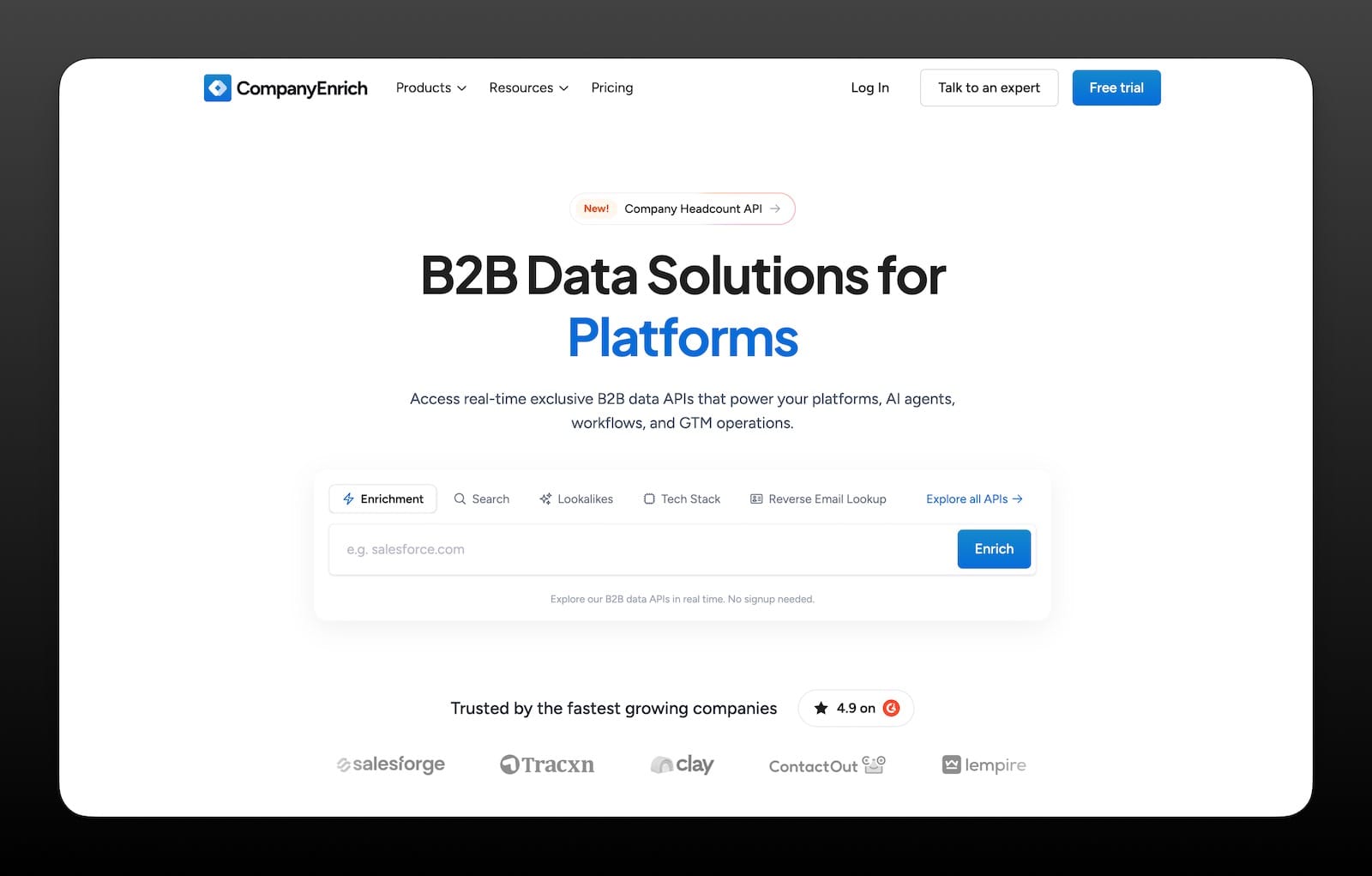
While building Usermotion, enrichment provider bills were getting expensive. Sometime in 2023, with AI quietly becoming usable, they asked an obvious question:
"AI is here. Can we just do this ourselves?"
Parse the page. Extract the description. Pull the logo. Find the social handles. Estimate headcount. Categorize the business. All the things they were paying separate providers for.
It worked. They built it for internal use first, then shut Usermotion down and pointed everything at the new product.
What CompanyEnrich does today
- About 50 million domains under crawl
- Roughly 30 million companies after quality filtering
- Endpoints include: domain to company profile, natural language search ("best popup tool on the market" returns a top-5 ranked list), similar-company lookup, and periodic history snapshots
- Customers: marketing and sales teams, agencies running it for their clients, and other SaaS companies embedding it as an API in their own products
Why GTM tools exploded in 2024–2026
Amir's read on the Clay-era GTM tool boom is that AI dropped the cost of certain workflows below the headcount line.
"A sales team used to be five people. Now it's two. Prospecting used to take a long time. AI cuts that. Personalized outreach used to be written by hand. AI writes it."
That's the bull case for orchestration platforms like Clay (which, side note, was an Announcekit customer back in the day).
Why data providers benefit from AI rather than getting replaced
The thesis I pushed in the conversation: data providers are AI's electricity. An LLM can't crawl 50M domains on every query. The economics don't work. But it can call an API and pull the answer in one round trip. As more workflows become AI-driven, demand for clean, structured B2B data goes up, not down.
Amir agrees. The proprietary crawl and the cleanup pipeline that takes weeks of engineering to get right are exactly the kind of thing AI doesn't replace, it consumes.
What's different from BuiltWith circa 2018
About seven or eight years ago, they paid BuiltWith roughly $400 for a list of domains using Announcekit competitors. They built an importer tool, sent cold emails, got zero response. Why?
"The customer already has one installed. They don't want to switch. 'You pulling me over doesn't matter to me,' is what they're saying."
The lesson: raw data alone doesn't generate sales. Change signals generate sales. A funding round. Headcount growth. A switch in tech stack. Those break the inertia of an already-installed setup. The history layer CompanyEnrich just shipped is a direct bet on this thesis.
Three people running a SaaS: the numbers
| Product | Years | Peak team | Peak MRR | Exit multiple | Outcome |
|---|---|---|---|---|---|
| Content site (LATAM) | ~2014–2017 | 8–10 | n/a (arbitrage) | n/a | Killed by Facebook policy change |
| Restpack (HTML→PDF API) | ~2016–2020 | 3 | ~$20K | ~3.5x ARR | Sold via Acquire.com |
| Announcekit (changelog) | ~2018–2023 | 8 | n/a (~400 customers) | ~3.5x ARR | Aquihire to a studio, team stayed on |
| Usermotion (lead scoring) | ~2023–2024 | 3–5 | low | — | Killed at 1 year, no traction |
| CompanyEnrich.com | 2024–ongoing | 3 | growing | active | 50M-domain data layer |
Seven things to take from this conversation
- Don't build on someone else's junkyard. Facebook can switch off your ad account overnight. The real cost of a single-platform arbitrage model isn't the valuation, it's the lack of optionality.
- In an acquisition, pick the cleanest close, not the highest offer. Worked for Restpack, worked for Announcekit. "Talking about the same deal from the same side of the table" is a real filter to apply when comparing term sheets.
- Before you go from 3 to 8 people, ask why. What made Amir unhappy about the Announcekit team scale wasn't growth targets. It was the cultural mismatch. If the founders' DNA is built for a three-person team that touches every customer, an eight-person hierarchy isn't an extension, it's a different company.
- The free plan is a phase question, not a playbook. Early on it's a feedback engine. Once the product is mature, it can eat your support queue alive. There's no universal answer.
- If a year goes by without traction, kill it. "Keep going, founders make it after eight years" was bad advice in 2018 and it's worse now. Pre-AI, the sunk cost of pivoting was high. Now you can ship a new product in days. Loyalty to a sunk cost is more expensive than it used to be.
- A VC-backed competitor shutting down is opportunity, not bad news. If you can survive on $20K MRR in the same market where a $5M-burn competitor just closed, you're the natural inheritor of that demand.
- In an AI-heavy market, your moat is the data you produce. AI made shipping products cheap. So products are less valuable, but the data layer underneath them is more valuable. CompanyEnrich's 50M-domain crawl is valuable not despite AI but because of it.
The closing line
The thing tying all four startups together, Amir said it himself at the end of the conversation:
"Wanting to build something, and seeing people use it. That's a real source of satisfaction. I'm browsing the internet, I need a product, I sign up, and I see, oh, that widget on the side, that's us. I click the button. The button I made."
That might be the actual paycheck for a founder. Exits are a bonus.
Subscribe my Emre Elbeyoglu Youtube Channel for more videos like that.


